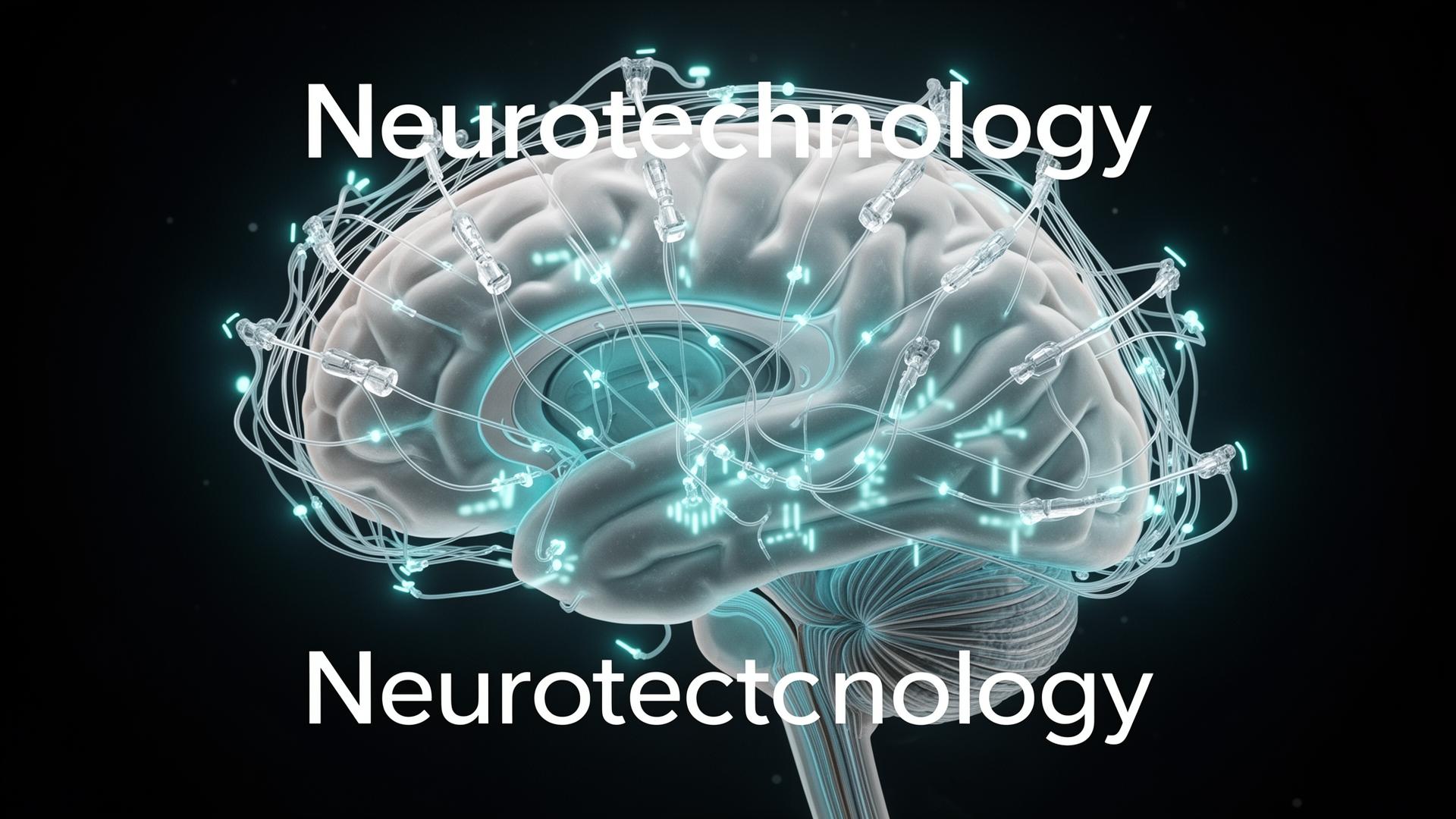
Neurotechnology
Neurotechnology - brain-computer interfaces, neural implants, and advanced neuromodulation - is closing the gap between biological cognition and silicon. The implications run from restoring lost function to extending what cognition can be.
Key takeaways
- BCIs already restore communication and motor function in paralyzed patients.
- Non-invasive neurotech (EEG, fNIRS) is becoming consumer-grade.
- Neural data is the most intimate form of personal information.
- The line between therapy and enhancement is becoming a central ethical question.
What you'll learn
How we read and write to the nervous system, the companies leading the field, and the medical, ethical, and societal stakes.
Explore the topics
Deep explainers across the field, from foundational concepts to frontier research.
Brain–Computer Interfaces: An Overview
Recording, decoding, and translating neural activity.
Neuralink, Synchron & the BCI Industry
The companies racing to commercial brain interfaces.
Neural Implants & Stimulation
Deep brain stimulation, spinal stimulation, and therapy.
Memory & Cognitive Augmentation
Closed-loop stimulation and the frontier of enhancement.
Neurorights & Mental Privacy
The ethics of reading and writing to the brain.
The Future of BCI
Bandwidth, biocompatibility, and convergence with AI.
Frequently asked questions
What is a brain-computer interface?
+
A BCI is a system that reads neural signals - invasively or non-invasively - and translates them into commands for external devices, or stimulates the brain to alter activity.
Can BCIs restore vision or movement?
+
Yes. Implanted BCIs have enabled paralyzed patients to type, speak, and control robotic limbs. Visual prostheses are advancing but remain limited.
Is Neuralink available?
+
Neuralink is in early human trials. Commercial availability is years away and initial use cases are medical, not enhancement.
Are non-invasive BCIs accurate?
+
Non-invasive methods like EEG have lower signal quality than implants but are improving rapidly with ML-based decoding.
What are the risks of neural implants?
+
Surgical risk, device failure, infection, long-term electrode degradation, and unprecedented privacy concerns over neural data.
Glossary
- BCI
- Brain–Computer Interface - system linking neural activity to computers.
- EEG
- Electroencephalography - non-invasive recording of electrical brain activity.
- DBS
- Deep Brain Stimulation - implanted electrodes that modulate neural circuits.
- Neural Decoding
- Translating brain signals into meaningful outputs using ML.
- Neural Data
- Recordings of brain or nervous-system activity.
Read full definition
Read full definition
Neurotech at home
Consumer neurotech, EEG headbands, and meditation devices for tracking your own brain data. As an Amazon Associate BRAINMATTER earns from qualifying purchases at no extra cost to you.
Sponsor this work
BRAINMATTER is independent and reader-supported. Everything here stays free, ad-light, and open to everyone. A one-time sponsorship covers research time, editorial review, and hosting so we can keep publishing without paywalls.
Further reading & sources
Explore the BRAINMATTER pillars
Authoritative cornerstone hubs across human intelligence, AI, neurotechnology, and the brain economy. Each link goes to a pillar with long-form explainers, sources, and FAQs.
The Future of Human Intelligence
Flagship pillar on cognitive neuroscience, neuroplasticity, and the next 25 years of the human mind.
Human intelligence · Neuroplasticity · Brain capital
Human Intelligence & Cognitive Neuroscience
How the brain learns, remembers, reasons, and feels — from working memory to consciousness.
Cognitive neuroscience · Memory · Consciousness
Artificial Intelligence & NeuroAI
Foundation models, transformers, multimodal systems, and brain-inspired AI architectures.
AI · NeuroAI · Foundation models
Artificial General Intelligence (AGI)
Definitions, benchmarks, timelines, and the open scientific problems on the road to AGI.
AGI · Superintelligence · Scaling laws
Human–AI Collaboration & Cognitive Enhancement
How humans and intelligent systems augment each other's reasoning, creativity, and decision-making.
Human-AI collaboration · Cognitive enhancement
Neurodivergence & Brain Health
Autism, ADHD, dyslexia, and the neuroscience of cognitive diversity and lifelong brain health.
Neurodivergence · Brain health · Neurodiversity
AI Ethics, Safety & Alignment
Bias, privacy, misinformation, AI safety, and governance of intelligent systems.
AI ethics · Alignment · Governance
Future of Humanity & the Brain Economy
Long-horizon scenarios for the brain economy, post-AGI society, and civilizational risk.
Brain economy · Post-AGI · Long-termism
Intelligence Index — Human vs Machine
The definitive comparison of biological and artificial cognition across substrate, scale, and reasoning.
Intelligence index · Benchmarks · Comparative cognition
Frontier AI & Neuroscience Labs
Deep profiles of the research organizations defining the next era of intelligence.
OpenAI · Anthropic · DeepMind · Neuralink
Continue exploring
Human Intelligence
The biology, psychology, and architecture of human cognition - from neurons to consciousness.
Future of Humanity
Long-term scenarios for civilization, cognition, and what it means to be human in an AI era.
AI Research Labs & Companies
Inside the organizations building the frontier - their research, missions, and impact.