
Brain-Computer Interfaces: An Overview
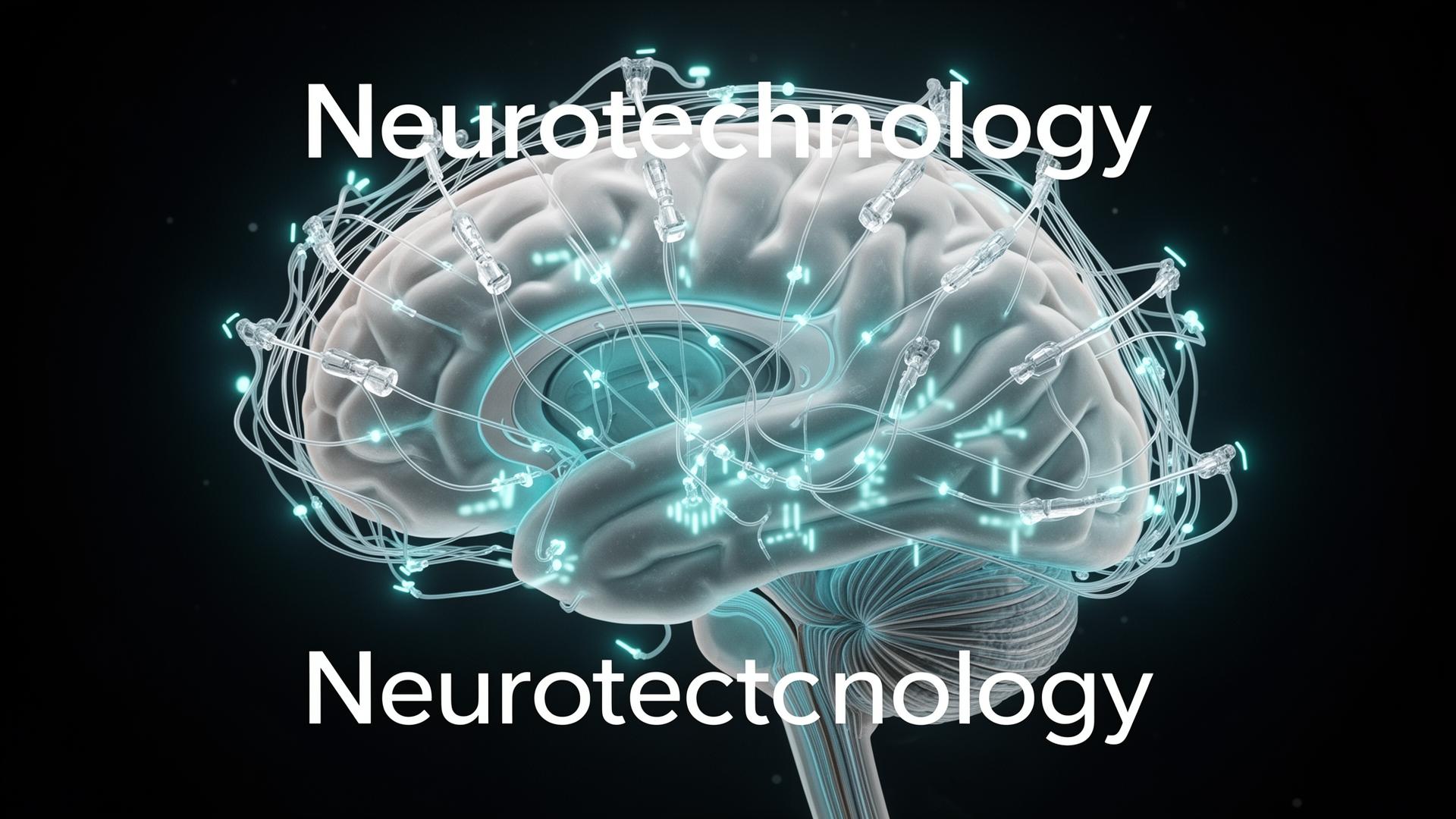
A brain-computer interface (BCI) is a system that translates measured neural activity into commands for an external device, and, increasingly, writes structured information back into the nervous system. After five decades as a research curiosity, BCIs are now a regulated medical-device category, with multiple human implants in active FDA trials and the first 1,000-channel-class systems in clinical use.
Key facts
- Cochlear implants - the most successful BCI in history - have been received by over 1 million people globally (NIDCD, 2024).
- The Utah array has been used in humans since the BrainGate program's first implant in 2004.
- Speech BCIs now decode 60-80 words per minute in clinical trials, with word error rates under 25%.
- Synchron's Stentrode is delivered via the jugular vein and avoids craniotomy entirely.
- DBS is FDA-approved for at least five conditions and has been implanted in 200,000+ patients globally.
- Foundation models for neural data (POYO, Neuroformer) have collapsed BCI calibration from hours to minutes.
- FDA's first commercial PMA for a fully implanted high-channel-count BCI is widely expected before 2030.
What a BCI Is - and Isn't
A BCI is defined by three properties: (1) it measures activity originating in the central nervous system, (2) it provides feedback or control that bypasses the body's normal output pathways (muscles, peripheral nerves), and (3) it operates in real time. Systems that merely stimulate without measuring (e.g. standalone TENS units) are not BCIs in the strict sense; systems that decode peripheral EMG signals are technically myoelectric interfaces, though they are often grouped with BCIs in industry usage.
The canonical taxonomy from Wolpaw and Wolpaw (2012) distinguishes 'dependent' BCIs - which require residual muscular control - from 'independent' BCIs that work in fully locked-in users. The independent case is the medically critical one and the hardest engineering problem.
- Reads neural signals: spikes, local field potentials (LFPs), ECoG, EEG, or fMRI/fNIRS proxies.
- Decodes intent in real time using statistical or deep-learning models.
- Acts on a device: cursor, robotic arm, speech synthesizer, wheelchair, exoskeleton, or stimulator.
- May optionally close the loop by writing back via stimulation, sound, or sensory feedback.
Recording Modalities and Trade-offs
BCIs span non-invasive (EEG, fNIRS, MEG), minimally invasive (ECoG, endovascular stentrodes), and fully invasive (Utah arrays, Neuralink threads, Paradromics Connexus, Neuropixels probes) approaches. Each modality occupies a distinct point on the trade-off curve between spatial resolution, temporal resolution, bandwidth, longevity, and surgical risk.
Non-invasive EEG offers millisecond temporal resolution but ~10 cm² spatial smearing and a signal-to-noise ratio orders of magnitude below intracortical recording. fNIRS adds hemodynamic information at slower timescales. MEG is high-resolution but requires shielded rooms, though optically pumped magnetometers (OPM-MEG) are removing that constraint.
Invasive arrays resolve single-unit action potentials at sub-millisecond resolution, enabling decoders that can reconstruct continuous limb trajectories or full sentences. The cost is craniotomy, gliosis around the implant, and a typical signal-quality half-life measured in months to a few years.
Neural Decoding
Modern decoders use recurrent neural networks (LSTM, GRU) and transformer architectures to map neural population activity onto continuous controls (cursor velocity, arm kinematics) or discrete outputs (phonemes, characters, words). The shift from linear Kalman filters to deep models around 2018-2021 roughly doubled achievable bandwidth.
Calibration time has dropped from hours per session to minutes thanks to transfer learning and subject-general 'foundation models' for neural data (POYO, Neuroformer, NDT). Cross-day stability now allows users to resume control after weeks without recalibration in some systems.
State-of-the-art speech BCIs (Willett et al., Nature 2023; Metzger et al., Nature 2023; Card et al., NEJM 2024) decode 60-80 words per minute from intracortical signals in people with paralysis, with word error rates under 25% on large vocabularies - approaching natural conversational pace.
Writing to the Brain
The 'write' side of BCI is dominated by mature therapeutic stimulators: deep brain stimulation (DBS) for movement disorders, cochlear implants for sensorineural hearing loss, retinal implants for outer-retinal disease, spinal cord stimulators for chronic pain and paralysis, and vagus nerve stimulators for epilepsy and depression.
Cochlear implants are the most successful neural prosthesis in history, with more than 1 million recipients globally as of 2024 (NIDCD). DBS has been delivered to over 200,000 patients across at least five FDA-approved indications.
High-resolution sensory write-in (naturalistic vision, fine tactile feedback) remains substantially harder than reading. Intracortical microstimulation can evoke percepts but selectivity, stability, and signal-to-noise ratio constrain resolution to coarse phosphenes or pressure cues.
Clinical Applications Today
Restoration of communication in ALS, brainstem stroke, and locked-in syndrome. Motor control for quadriplegia via BrainGate, Synchron, and Neuralink trials. Vision restoration in early trials (Science Corp Prima, Neuralink Blindsight). Hearing restoration via cochlear and auditory-brainstem implants. DBS for Parkinson's disease, essential tremor, dystonia, OCD (Humanitarian Device Exemption), drug-resistant epilepsy (RNS), and a growing list of trial indications including depression and Tourette syndrome.
Spinal cord stimulation for chronic pain is the highest-volume neuromodulation therapy worldwide. Targeted epidural spinal stimulation (Onward, EPFL/CHUV STIMO program) has restored independent walking in people with motor-complete spinal cord injury - a result published in Nature Medicine (2022) and Lancet Neurology (2024).
Regulation and Oversight
In the United States, implanted BCIs are regulated by the FDA under Investigational Device Exemptions (IDEs) for early human trials. The EU operates under MDR; the UK under MHRA; Japan under PMDA; Australia under TGA; China under NMPA. Most BCIs are Class III high-risk devices requiring premarket approval (PMA) for clearance.
Patient selection, informed consent (especially for device explant), and long-term post-market support are dominant ethical issues. The Second Sight bankruptcy (2020) left over 350 Argus II retinal-implant recipients without manufacturer support, prompting calls for explant guarantees and lifetime device-support escrow.
Frequently asked
Can a BCI read my thoughts?
+
No. Current systems decode specific motor or language outputs that the user actively, voluntarily intends to produce. They cannot reconstruct arbitrary inner monologue, dreams, or unconscious cognition. Mental privacy concerns are real for the longer term, but no deployed system today performs general thought-reading.
How long does a BCI implant last?
+
Intracortical electrode arrays typically maintain useful single-unit yield for 1 to 7 years, with signal quality declining due to gliosis (scar formation) and material fatigue. Surface arrays and minimally invasive endovascular devices tend to be more stable over time. Replacement and revision are part of long-term clinical planning.
Who qualifies for a BCI today?
+
Eligibility is currently restricted to people with severe motor disability - typically tetraplegia from spinal cord injury, ALS, brainstem stroke, or locked-in syndrome - and only through enrolment in registered clinical trials such as BrainGate, Neuralink PRIME, Synchron COMMAND, or Paradromics' early-feasibility studies.
How much does a BCI cost?
+
Implanted BCIs are not yet commercially priced for elective use. In clinical trial settings, full hardware-plus-surgery cost is typically estimated at USD 100,000 to 500,000 per patient when accounting for device, surgical procedure, and follow-up care. Commercial pricing on first PMA approval is widely expected to be in the high-five to low-six figures.
Is a BCI safe?
+
Modern implanted BCIs have a safety profile broadly comparable to other neurosurgical implants. Risks include hemorrhage (~1-2%), infection, hardware failure, and device migration. Non-invasive consumer EEG devices have negligible physical risk but raise serious data-privacy issues.
What is the difference between a BCI and a neural implant?
+
All BCIs that involve hardware in or on the body are neural implants, but not all neural implants are BCIs. A cochlear implant is a BCI (it bypasses the cochlea to deliver auditory information to the brain), while a pacemaker is not (it acts on the heart, not the central nervous system).
Sources & further reading
Neurotech at home
Consumer neurotech, EEG headbands, and meditation devices for tracking your own brain data. As an Amazon Associate BRAINMATTER earns from qualifying purchases at no extra cost to you.
Sponsor this work
BRAINMATTER is independent and reader-supported. Everything here stays free, ad-light, and open to everyone. A one-time sponsorship covers research time, editorial review, and hosting so we can keep publishing without paywalls.
Continue in this series
Industry
Neuralink, Synchron, and the BCI Industry
Therapeutics
Neural Implants and Stimulation
Frontier
Memory Prosthetics and Cognitive Augmentation
Ethics
Neurorights and the Ethics of Reading the Brain
Outlook
The Future of Brain-Computer Interfaces
Related across BRAINMATTER
Cornerstone pages on the same topics — across other authority hubs.