
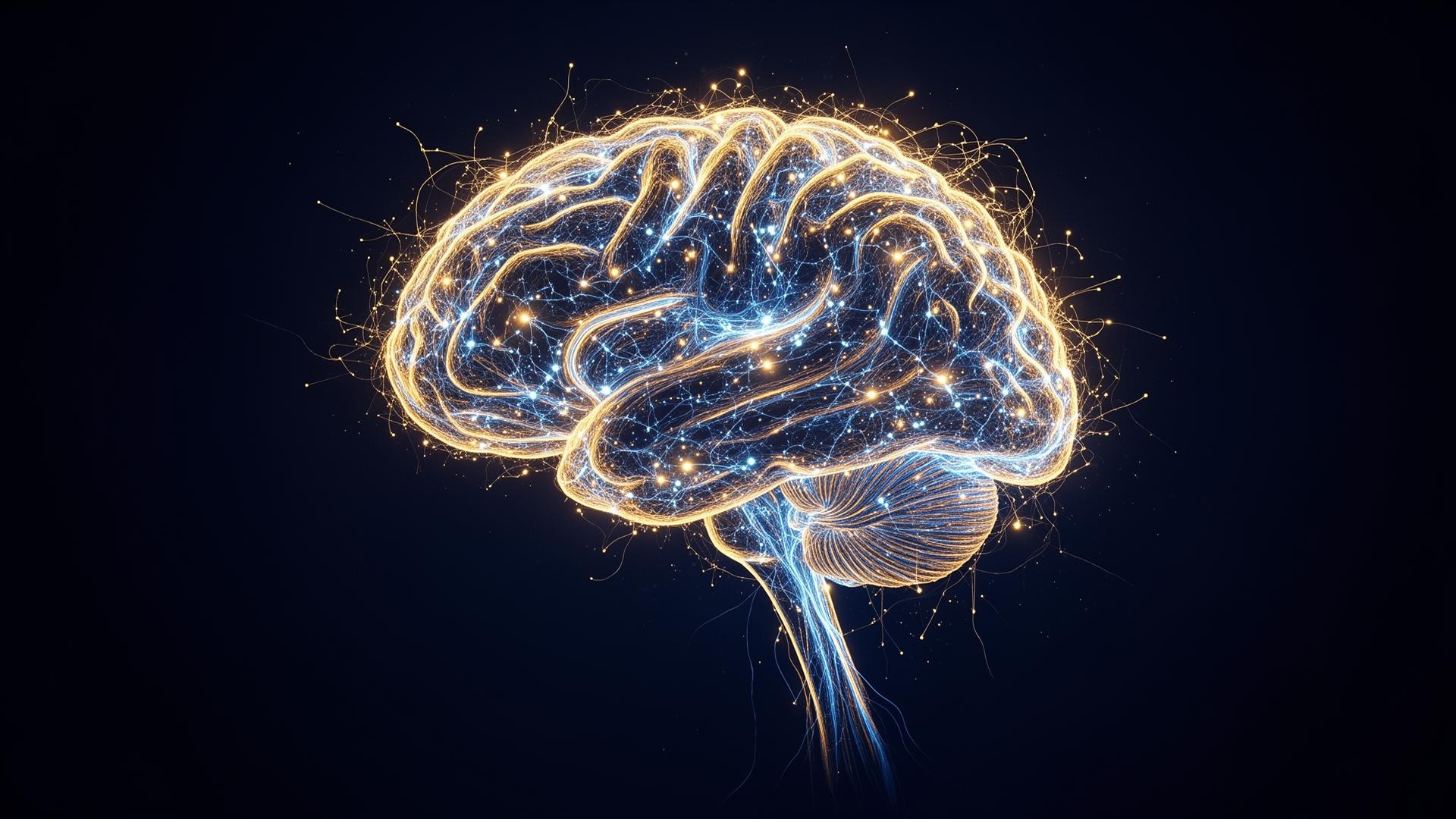
Reasoning and Decision-Making
Human reasoning blends fast intuitive judgment with slow deliberative analysis - a dual-process architecture that produces both creativity and systematic bias.
Key facts
- System 1/System 2 popularized by Kahneman (2011).
- Cognitive biases are robust and replicable.
- Bounded rationality is empirically dominant over expected utility.
- Most reasoning errors are predictable, not random.
Dual-Process Theory
Kahneman's System 1 (fast, automatic, intuitive) and System 2 (slow, effortful, analytic) provide a useful - if simplified - framework for cognitive psychology.
Most everyday cognition runs on System 1; System 2 intervenes selectively and is metabolically expensive.
Heuristics and Biases
Tversky and Kahneman's research program documented dozens of robust cognitive biases - availability, representativeness, anchoring, framing - that reflect adaptive shortcuts in evolved contexts.
Bounded Rationality
Herbert Simon argued that humans 'satisfice' rather than optimize, given limited time, information, and cognitive resources. This shifted economics and decision theory away from idealized rational actor models.
Frequently asked
Are humans rational?
+
Bounded rationality is a better description - humans are adaptively rational given cognitive constraints, but systematically violate normative rationality.
Can biases be unlearned?
+
Partially. Training reduces some biases in some contexts but rarely eliminates them, especially under time pressure.
Sources & further reading
Tools for a sharper mind
Books, journals and gear frequently cited across cognitive science reading lists. As an Amazon Associate BRAINMATTER earns from qualifying purchases at no extra cost to you.
Sponsor this work
BRAINMATTER is independent and reader-supported. Everything here stays free, ad-light, and open to everyone. A one-time sponsorship covers research time, editorial review, and hosting so we can keep publishing without paywalls.
Continue in this series
Biological Substrate
The Neuron and the Brain
Sensory Cognition
Perception and Attention
Storage and Recall
Memory Systems
Communication
Language and Symbolic Thought
Subjective Experience
Consciousness: The Hardest Problem
Psychometrics
Intelligence and IQ
Related across BRAINMATTER
Cornerstone pages on the same topics — across other authority hubs.
Cognition & Neuroscience
Human Intelligence hub
Cognitive neuroscience for the modern mind.
AI Ethics, Safety & Alignment
AI Ethics & Safety hub
Bias, privacy, alignment, and governance.
Cognition & Neuroscience
The Future of Human Intelligence
Neuroplasticity, memory, and the 25-year outlook.
AI Ethics, Safety & Alignment
AI alignment
Keeping advanced systems aimed at human values.
Cognition & Neuroscience
Neurodivergence
Cognitive variation across autism, ADHD, and dyslexia.
Cognition & Neuroscience
Glossary of cognitive terms
Authoritative definitions for the science.