
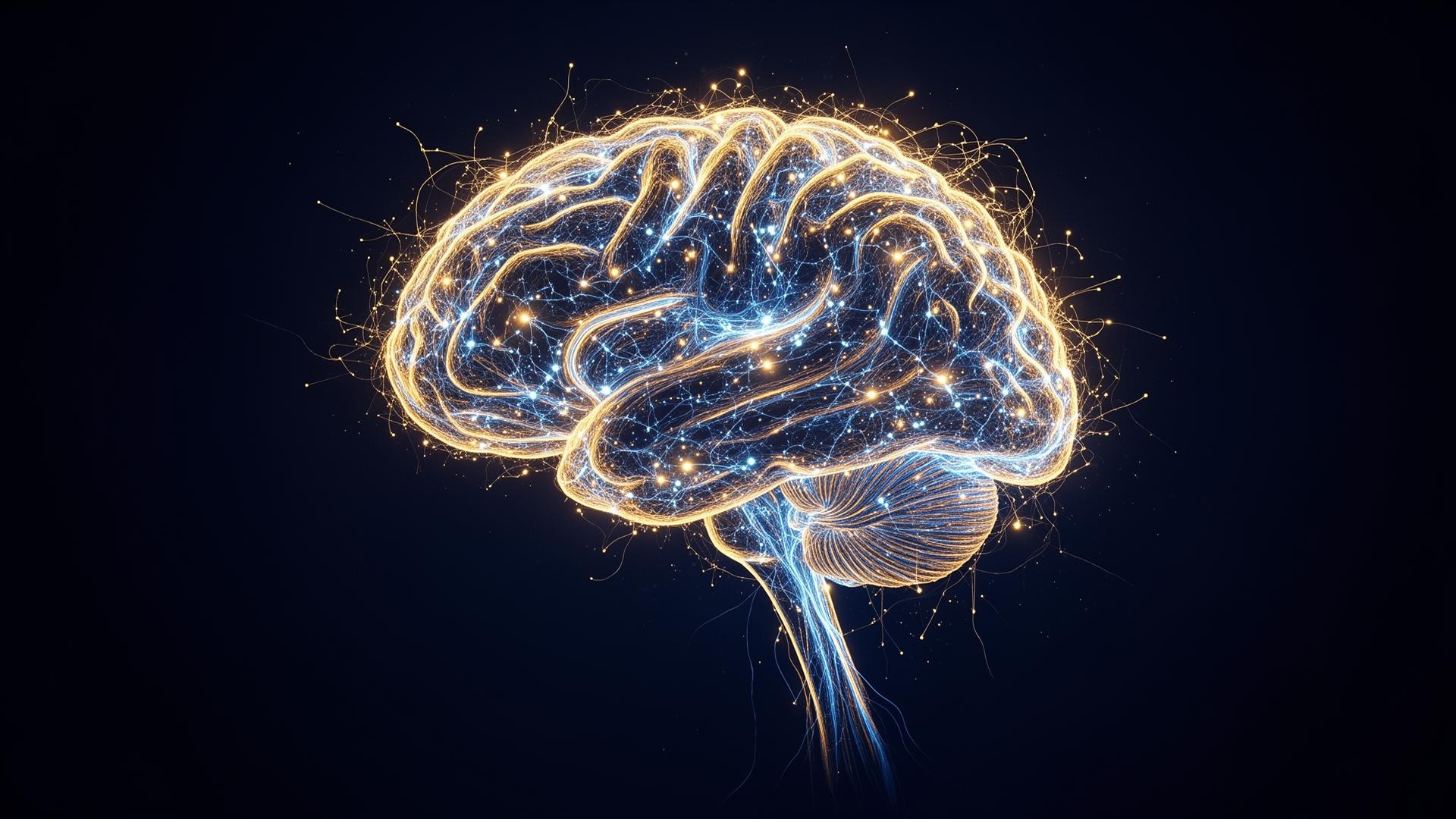
Perception and Attention
Perception is not passive reception but active construction - the brain builds a stable model of the world from noisy, ambiguous sensory input.
Key facts
- Perception is constructive, not passive recording.
- Predictive processing is the dominant modern framework.
- Attention is capacity-limited and selectively gates processing.
- The binding problem remains partly unresolved.
The Predictive Brain
Predictive processing frames perception as Bayesian inference: the brain continuously generates predictions about sensory input and updates them with prediction errors.
This explains illusions, hallucinations, and why expectation shapes what we see and hear.
Attention as Resource Allocation
Attention selects which signals receive deeper processing. Top-down (goal-driven) and bottom-up (stimulus-driven) attention interact through frontoparietal networks.
Capacity is limited: most cognition occurs outside conscious attention.
The Binding Problem
How distributed neural signals combine into unified percepts - a red apple, not 'red' plus 'apple' - remains partly unresolved. Synchrony, attention, and global workspace dynamics are leading candidates.
Frequently asked
Why do optical illusions work?
+
They exploit the brain's prior assumptions about light, geometry, and motion - the same priors that make perception efficient in normal conditions.
Can we attend to two things at once?
+
Rarely. Most apparent multitasking is rapid switching with measurable performance costs.
Sources & further reading
Tools for a sharper mind
Books, journals and gear frequently cited across cognitive science reading lists. As an Amazon Associate BRAINMATTER earns from qualifying purchases at no extra cost to you.
Sponsor this work
BRAINMATTER is independent and reader-supported. Everything here stays free, ad-light, and open to everyone. A one-time sponsorship covers research time, editorial review, and hosting so we can keep publishing without paywalls.
Continue in this series
Biological Substrate
The Neuron and the Brain
Storage and Recall
Memory Systems
Higher Cognition
Reasoning and Decision-Making
Communication
Language and Symbolic Thought
Subjective Experience
Consciousness: The Hardest Problem
Psychometrics
Intelligence and IQ
Related across BRAINMATTER
Cornerstone pages on the same topics — across other authority hubs.
Cognition & Neuroscience
Human Intelligence hub
Cognitive neuroscience for the modern mind.
Cognition & Neuroscience
The Future of Human Intelligence
Neuroplasticity, memory, and the 25-year outlook.
Cognition & Neuroscience
Neurodivergence
Cognitive variation across autism, ADHD, and dyslexia.
Cognition & Neuroscience
Glossary of cognitive terms
Authoritative definitions for the science.