
Emotion, Empathy & the Social Brain
An evidence-based hub on emotion, empathy, theory of mind, social cognition, attachment, and the circuits that make humans intensely social animals.
Key takeaways
- Emotion and cognition are deeply intertwined, not opposed systems.
- Empathy is multidimensional — emotional contagion, perspective-taking, and compassion are dissociable.
- Theory of mind develops in early childhood and continues to refine across the lifespan.
- Social isolation has measurable effects on cognition and long-term brain health.
- Moral judgment recruits both fast intuitive and slower deliberative circuits.
What this hub covers
Human cognition is fundamentally social. Most brain regions once labeled 'emotional' are now understood as integrated computational systems that shape attention, memory, and decision-making. This hub maps the science of emotion and social cognition as they actually work.
Long-form articles
Sourced, evidence-based explainers. New entries added regularly.
Emotion · Neuroscience · 9 min
The Neuroscience of Emotion: Beyond the 'Reptilian Brain'
Modern affective neuroscience replaces the triune-brain caricature with distributed networks that integrate body, context, and prediction.
Read article
Empathy · Social Cognition · 9 min
Empathy and Mirror Neurons: What the Evidence Actually Shows
Mirror neurons exist, but the popular 'mirror neuron theory of everything' overstates the case. Empathy involves multiple dissociable systems.
Read article
Social Cognition · Development · 8 min
Theory of Mind: Reading Other Minds
The ability to model others' beliefs, desires, and intentions is a foundational human cognitive skill — and one of the most actively studied in developmental and social neuroscience.
Read article
Networks · Social Neuroscience · 8 min
The Social Brain Network
A consistent set of brain regions — the social brain — supports thinking about people, relationships, and groups. Its architecture mirrors how socially demanding human life is.
Read article
Regulation · Mental Health · 8 min
Emotional Regulation: How the Brain Modulates Feeling
Effective emotional regulation is one of the strongest predictors of well-being, mental health, and life outcomes — and its neural mechanisms are now well characterized.
Read article
Attachment · Neurobiology · 8 min
Love and Attachment in the Brain
Attachment, pair bonding, and parental love are supported by ancient neuromodulator systems — oxytocin, vasopressin, and dopaminergic reward — interacting with cortical control.
Read article
Loneliness · Health · 8 min
Loneliness and the Brain
Chronic loneliness alters stress physiology, accelerates cognitive decline, and increases dementia risk. The brain treats social pain like physical pain.
Read article
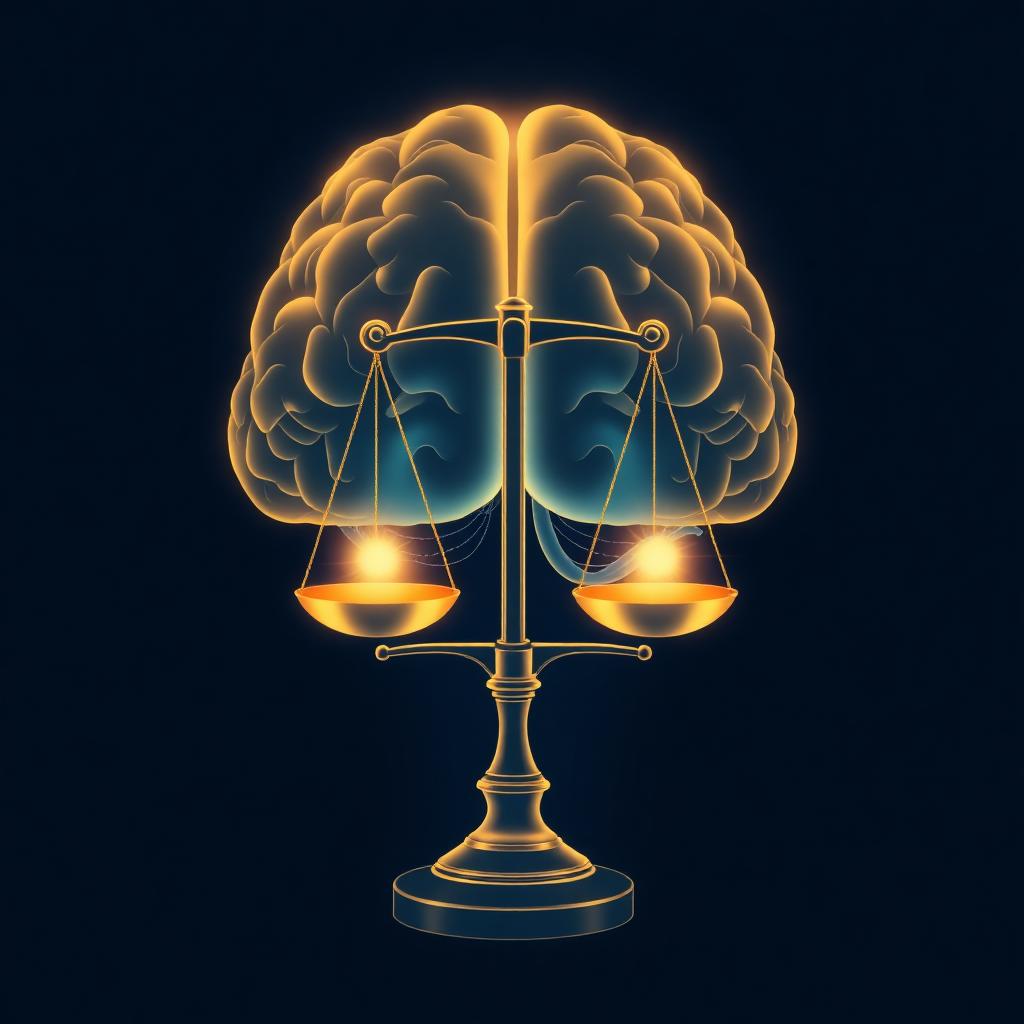
Morality · Cognition · 9 min
Moral Cognition: How the Brain Decides Right and Wrong
Moral judgment recruits fast intuitive processes and slower deliberative ones — and the balance between them shapes the kind of moral reasoner each of us is.
Read article
Frequently asked questions
Are emotions universal?
+
Basic affective dimensions (valence, arousal) appear universal; specific emotion categories show meaningful cultural variation.
Are mirror neurons the basis of empathy?
+
They contribute to a part of it — motor resonance — but full empathy involves multiple networks, not a single 'empathy neuron'.
Is loneliness bad for the brain?
+
Yes — chronic loneliness correlates with elevated stress, faster cognitive decline, and higher dementia risk in older adults.
Further reading & sources
Explore the BRAINMATTER pillars
Authoritative cornerstone hubs across human intelligence, AI, neurotechnology, and the brain economy. Each link goes to a pillar with long-form explainers, sources, and FAQs.
The Future of Human Intelligence
Flagship pillar on cognitive neuroscience, neuroplasticity, and the next 25 years of the human mind.
Human intelligence · Neuroplasticity · Brain capital
Human Intelligence & Cognitive Neuroscience
How the brain learns, remembers, reasons, and feels — from working memory to consciousness.
Cognitive neuroscience · Memory · Consciousness
Artificial Intelligence & NeuroAI
Foundation models, transformers, multimodal systems, and brain-inspired AI architectures.
AI · NeuroAI · Foundation models
Artificial General Intelligence (AGI)
Definitions, benchmarks, timelines, and the open scientific problems on the road to AGI.
AGI · Superintelligence · Scaling laws
Neurotechnology & Brain–Computer Interfaces
BCIs, neural implants, neuromodulation, and the engineering of human cognition.
Neurotechnology · BCI · Neural implants
Human–AI Collaboration & Cognitive Enhancement
How humans and intelligent systems augment each other's reasoning, creativity, and decision-making.
Human-AI collaboration · Cognitive enhancement
Neurodivergence & Brain Health
Autism, ADHD, dyslexia, and the neuroscience of cognitive diversity and lifelong brain health.
Neurodivergence · Brain health · Neurodiversity
AI Ethics, Safety & Alignment
Bias, privacy, misinformation, AI safety, and governance of intelligent systems.
AI ethics · Alignment · Governance
Future of Humanity & the Brain Economy
Long-horizon scenarios for the brain economy, post-AGI society, and civilizational risk.
Brain economy · Post-AGI · Long-termism
Intelligence Index — Human vs Machine
The definitive comparison of biological and artificial cognition across substrate, scale, and reasoning.
Intelligence index · Benchmarks · Comparative cognition
Frontier AI & Neuroscience Labs
Deep profiles of the research organizations defining the next era of intelligence.
OpenAI · Anthropic · DeepMind · Neuralink