Creativity & the Brain
Creativity is not a mystical gift. It is a cognitive process with identifiable neural signatures — one that can be understood, nurtured, and enhanced.
Key takeaways
- Creativity involves the dynamic interaction of default mode and executive control networks.
- The brain generates creative ideas through both deliberate and spontaneous processes.
- Insight moments are associated with sudden gamma-wave bursts and anterior cingulate activation.
- Expertise in a domain is necessary but not sufficient for creative achievement.
- Sleep, mood, and environment all measurably influence creative performance.
What this hub covers
From the sudden flash of insight to the gradual unfolding of artistic mastery, creativity is one of the brain's most remarkable capabilities. This pillar explores the neuroscience of creative thinking — the networks that generate novel ideas, the conditions that foster innovation, and the evidence-based strategies for enhancing creative output. Every article is grounded in peer-reviewed research.
Long-form articles
Sourced, evidence-based explainers. New entries added regularly.
Creativity · Neuroscience · Overview · 8 min
The Neuroscience of Creativity: How the Brain Generates Novel Ideas
Creativity is not a single process but a collection of cognitive abilities — divergent thinking, convergent thinking, and insight — each with distinct neural substrates.
Read article
Insight · Aha · Neuroscience · 8 min
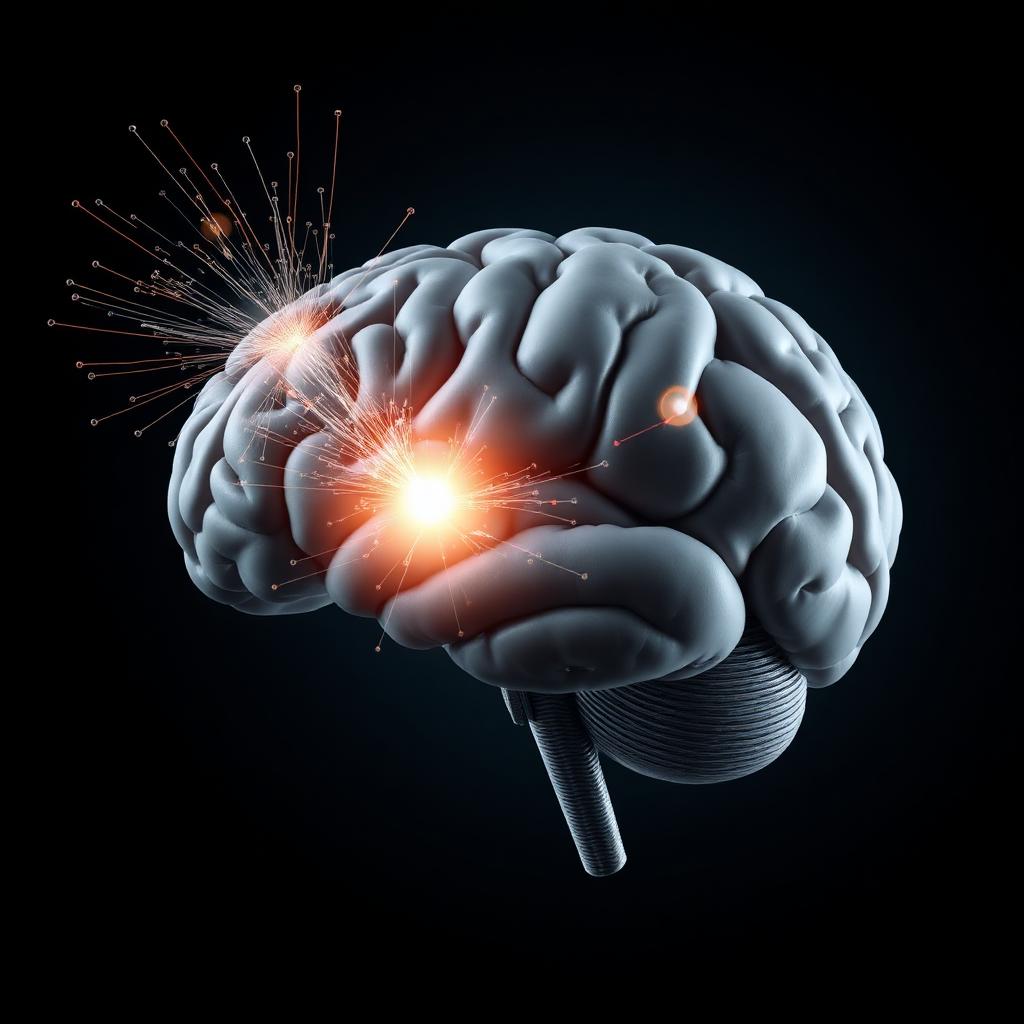
Insight and the Aha Moment: The Neural Spark of Discovery
That sudden feeling of clarity — the aha moment — is one of the most distinctive experiences in cognition. Neuroscience can now explain what happens in the brain when insight strikes.
Read article
Divergent · Thinking · Generation · 7 min
Divergent Thinking: How the Brain Explores Possibilities
Divergent thinking is the engine of creative generation — the capacity to produce many different ideas from a single starting point.
Read article
Art · Music · Performance · 8 min
The Artistic Brain: Music, Visual Art, and Performance
Artistic creativity is not a separate mental faculty. It emerges from the same neural systems that support perception, emotion, memory, and motor control — but configured and trained in distinctive ways.
Read article
Imagination · Simulation · Prediction · 8 min
Imagination and Mental Simulation: The Brain's Virtual Reality
The human brain is a powerful simulator. It can construct scenes that have never been experienced, predict future events, and mentally rehearse actions — all without external input.
Read article
Innovation · Problem-Solving · Cognition · 8 min
Innovation and Problem-Solving: Creative Cognition in Action
Innovation is creativity applied. It requires not just novel ideas but the ability to recognize problems, evaluate solutions, and implement them in real-world contexts.
Read article
Blocks · Resistance · Recovery · 7 min
Creative Blocks and How the Brain Overcomes Them
Every creative person experiences blocks. Understanding the neuroscience behind them is the first step to breaking through.
Read article
Enhancement · Training · Evidence · 8 min
Evidence-Based Ways to Enhance Creativity
Creativity can be cultivated. The evidence points to specific strategies — from lifestyle factors to structured training — that measurably improve creative output.
Read article
Frequently asked questions
Is creativity genetic?
+
Genetics contributes to creative potential, but the expression of that potential depends heavily on training, environment, and deliberate practice. Twin studies suggest heritability around 20–30% for general creativity.
Can creativity be learned?
+
Yes. Creative thinking skills can be trained, and specific strategies — perspective-taking, analogy, constraint manipulation — produce measurable improvements in creative output.
Are creative people more likely to be mentally ill?
+
Some association exists, particularly between creativity and mild mood variation or openness to experience. However, severe mental illness generally impairs rather than enhances creative function.
What is the best environment for creativity?
+
Moderate noise, ambient warmth, exposure to nature, and psychological safety all support creative thinking. The optimal environment varies by individual and task.
Further reading & sources
Explore the BRAINMATTER pillars
Authoritative cornerstone hubs across human intelligence, AI, neurotechnology, and the brain economy. Each link goes to a pillar with long-form explainers, sources, and FAQs.
The Future of Human Intelligence
Flagship pillar on cognitive neuroscience, neuroplasticity, and the next 25 years of the human mind.
Human intelligence · Neuroplasticity · Brain capital
Human Intelligence & Cognitive Neuroscience
How the brain learns, remembers, reasons, and feels — from working memory to consciousness.
Cognitive neuroscience · Memory · Consciousness
Artificial Intelligence & NeuroAI
Foundation models, transformers, multimodal systems, and brain-inspired AI architectures.
AI · NeuroAI · Foundation models
Artificial General Intelligence (AGI)
Definitions, benchmarks, timelines, and the open scientific problems on the road to AGI.
AGI · Superintelligence · Scaling laws
Neurotechnology & Brain–Computer Interfaces
BCIs, neural implants, neuromodulation, and the engineering of human cognition.
Neurotechnology · BCI · Neural implants
Human–AI Collaboration & Cognitive Enhancement
How humans and intelligent systems augment each other's reasoning, creativity, and decision-making.
Human-AI collaboration · Cognitive enhancement
Neurodivergence & Brain Health
Autism, ADHD, dyslexia, and the neuroscience of cognitive diversity and lifelong brain health.
Neurodivergence · Brain health · Neurodiversity
AI Ethics, Safety & Alignment
Bias, privacy, misinformation, AI safety, and governance of intelligent systems.
AI ethics · Alignment · Governance
Future of Humanity & the Brain Economy
Long-horizon scenarios for the brain economy, post-AGI society, and civilizational risk.
Brain economy · Post-AGI · Long-termism
Intelligence Index — Human vs Machine
The definitive comparison of biological and artificial cognition across substrate, scale, and reasoning.
Intelligence index · Benchmarks · Comparative cognition
Frontier AI & Neuroscience Labs
Deep profiles of the research organizations defining the next era of intelligence.
OpenAI · Anthropic · DeepMind · Neuralink