
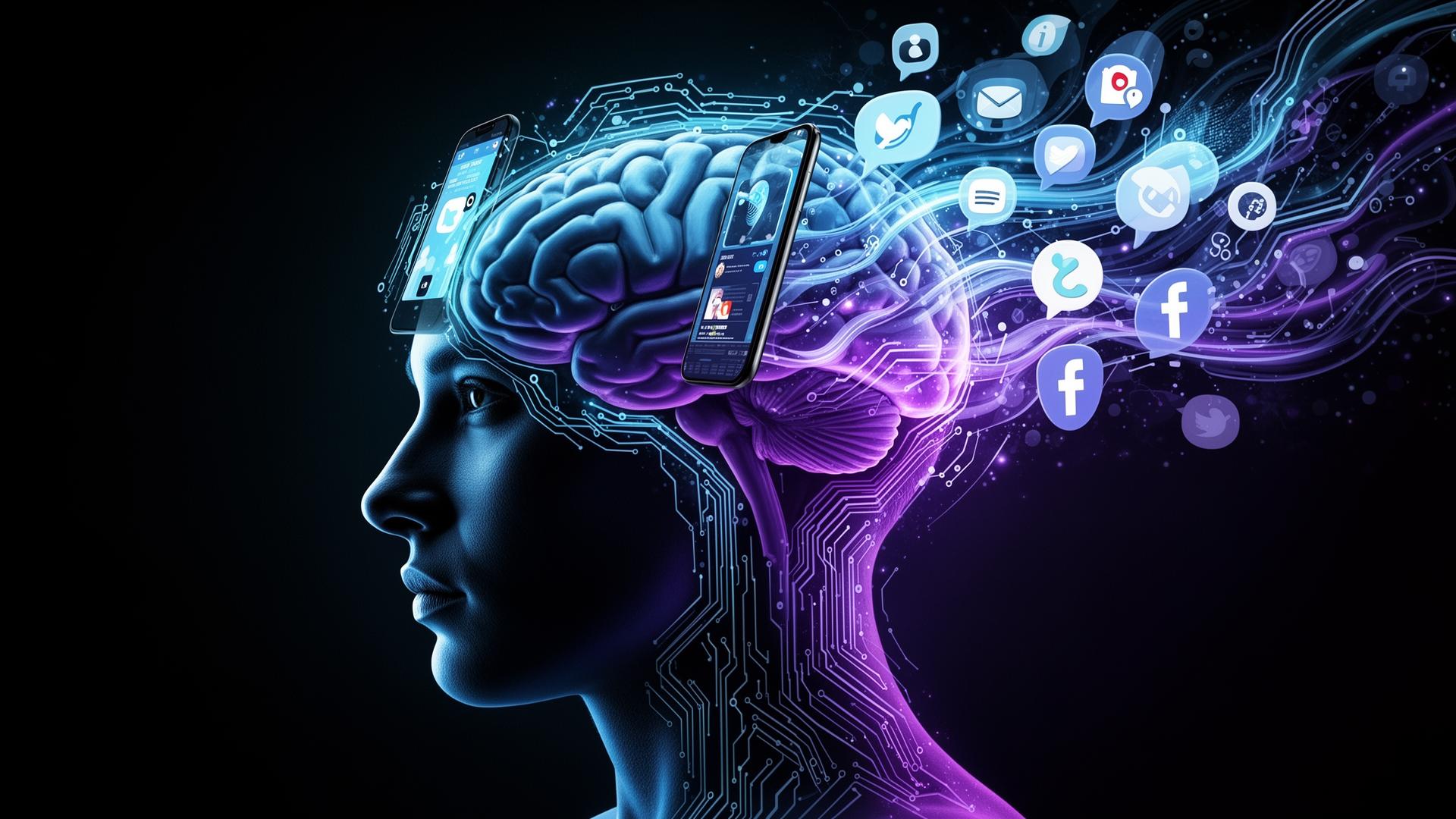
Technology and the Brain
How smartphones, screens, social media, and AI are reshaping attention, memory, decision-making, and the architecture of human cognition in the digital age.
Key takeaways
- Digital technology is neither purely beneficial nor purely harmful; effects depend on usage patterns, content, and individual differences.
- Notifications fragment attention, activate dopamine circuits, and impair sustained focus through constant task-switching.
- The internet functions as externalized memory, changing what we need to remember internally and how we organize knowledge.
- Video games can enhance attention, spatial reasoning, and decision-making, but excessive gaming has documented risks.
- Intentional digital minimalism — reducing unnecessary screen time — improves focus, sleep, and mental health.
What this hub covers
Digital technology is the defining environment of modern cognition. This hub examines the neuroscience of how screens, notifications, social media, and AI assistants affect attention, memory, learning, and wellbeing. The evidence is mixed: some digital activities enhance cognition, while others impair it. The key variable is not technology itself but how we use it.
Long-form articles
Sourced, evidence-based explainers. New entries added regularly.
Development · Screens · 9 min
Screen Time and the Developing Brain: What the Evidence Shows
Children are growing up with unprecedented exposure to screens. This article reviews the neuroscience of how screen time affects brain development, cognition, and behavior.
Read article
Addiction · Reward · 8 min
Social Media, Dopamine, and the Brain's Reward System
Social media platforms are engineered to capture attention by hijacking the brain's dopamine-based reward system. Understanding this neuroscience helps explain why these platforms are so engaging — and potentially so addictive.
Read article
Attention · Interruption · 7 min
Notifications and the Fragmented Brain
Push notifications fragment attention, increase stress, and degrade cognitive performance. This article examines the neuroscience of interruption and how to protect focus in a notification-saturated world.
Read article
Memory · Cognition · 8 min
The Internet and Externalized Memory
The internet functions as an external memory system, changing what we remember and how we organize knowledge. This 'Google effect' has profound implications for learning, expertise, and cognitive independence.
Read article
Gaming · Enhancement · 8 min
Video Games and Cognitive Enhancement: What the Evidence Supports
Action video games improve visual attention, spatial reasoning, and decision-making. But the benefits are specific, modest, and contingent on the type of game and amount of play. This article separates the evidence from the hype.
Read article
Wellbeing · Minimalism · 7 min
Digital Minimalism and Cognitive Restoration
Digital minimalism — the intentional reduction of unnecessary technology use — improves focus, creativity, and wellbeing. This article reviews the neuroscience and psychology of why less screen time often means better cognition.
Read article
Spatial Memory · GPS · 7 min
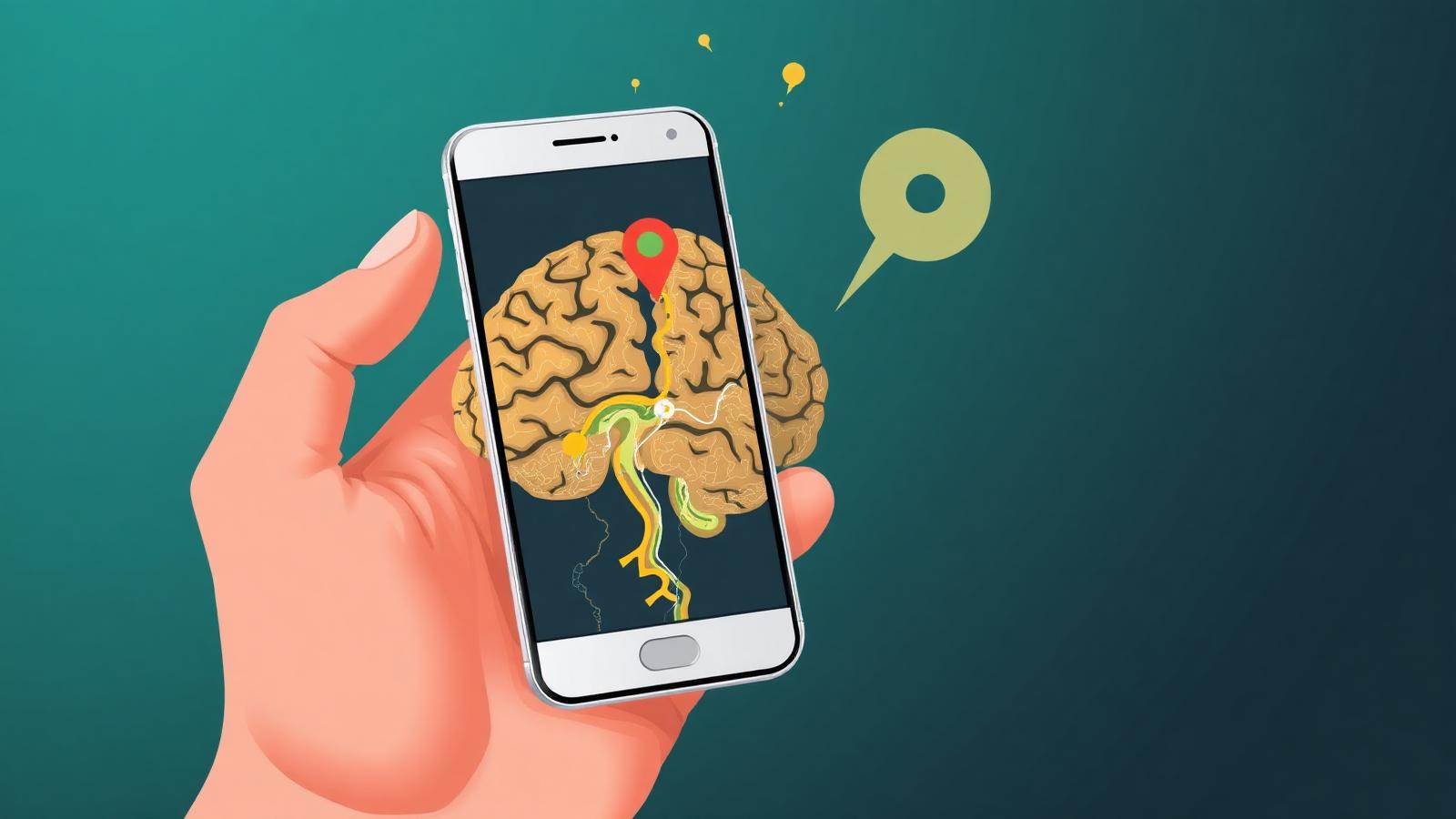
Smartphones and Spatial Navigation: How GPS Affects the Hippocampus
Using GPS for navigation may impair the brain's spatial memory systems. This article examines the evidence and explores how to maintain spatial cognition in the age of turn-by-turn directions.
Read article
Wellbeing · Habits · 8 min
Building a Healthier Relationship with Technology
Technology is neither inherently good nor bad for the brain. The effects depend on how we use it. This article offers evidence-based strategies for developing a intentional, sustainable relationship with digital tools.
Read article
Frequently asked questions
Is technology making us dumber?
+
No clear evidence supports this. Technology changes what we need to know and how we solve problems. Some capacities (spatial reasoning, information retrieval) may improve while others (deep reading, sustained attention, spatial navigation) may decline. The net effect depends on usage patterns.
How much screen time is too much?
+
There is no universal threshold. For children under 2, minimal screen time is recommended. For school-age children, 2-3 hours of recreational screen time is a common guideline. For adults, the key question is whether screen time displaces sleep, exercise, social interaction, or meaningful work.
Do smartphones affect memory?
+
They change memory use rather than capacity. We remember less factual information (offloaded to search engines) but may develop better metacognitive skills (knowing where to find information). The long-term effects on internal memory consolidation are still being studied.
Can video games improve cognition?
+
Action video games improve visual attention, spatial reasoning, and task-switching. Strategy games enhance planning and problem-solving. But benefits are game-specific and do not necessarily generalize to real-world tasks. Excessive gaming can displace sleep, exercise, and social interaction.
What is digital minimalism?
+
A philosophy of technology use that emphasizes intentionality: using specific tools for specific purposes rather than defaulting to screen-based distraction. It involves decluttering digital life, setting boundaries, and reclaiming attention for meaningful activities.
Further reading & sources
Explore the BRAINMATTER pillars
Authoritative cornerstone hubs across human intelligence, AI, neurotechnology, and the brain economy. Each link goes to a pillar with long-form explainers, sources, and FAQs.
The Future of Human Intelligence
Flagship pillar on cognitive neuroscience, neuroplasticity, and the next 25 years of the human mind.
Human intelligence · Neuroplasticity · Brain capital
Human Intelligence & Cognitive Neuroscience
How the brain learns, remembers, reasons, and feels — from working memory to consciousness.
Cognitive neuroscience · Memory · Consciousness
Artificial Intelligence & NeuroAI
Foundation models, transformers, multimodal systems, and brain-inspired AI architectures.
AI · NeuroAI · Foundation models
Artificial General Intelligence (AGI)
Definitions, benchmarks, timelines, and the open scientific problems on the road to AGI.
AGI · Superintelligence · Scaling laws
Neurotechnology & Brain–Computer Interfaces
BCIs, neural implants, neuromodulation, and the engineering of human cognition.
Neurotechnology · BCI · Neural implants
Human–AI Collaboration & Cognitive Enhancement
How humans and intelligent systems augment each other's reasoning, creativity, and decision-making.
Human-AI collaboration · Cognitive enhancement
Neurodivergence & Brain Health
Autism, ADHD, dyslexia, and the neuroscience of cognitive diversity and lifelong brain health.
Neurodivergence · Brain health · Neurodiversity
AI Ethics, Safety & Alignment
Bias, privacy, misinformation, AI safety, and governance of intelligent systems.
AI ethics · Alignment · Governance
Future of Humanity & the Brain Economy
Long-horizon scenarios for the brain economy, post-AGI society, and civilizational risk.
Brain economy · Post-AGI · Long-termism
Intelligence Index — Human vs Machine
The definitive comparison of biological and artificial cognition across substrate, scale, and reasoning.
Intelligence index · Benchmarks · Comparative cognition
Frontier AI & Neuroscience Labs
Deep profiles of the research organizations defining the next era of intelligence.
OpenAI · Anthropic · DeepMind · Neuralink