
Stress, Trauma & the Brain
Stress and trauma reshape the brain — for survival in the short term, and at real cost when they persist. Understanding the biology is the first step toward effective recovery.
Key takeaways
- The acute stress response is adaptive; chronic activation causes damage across the brain and body.
- Trauma alters fear, memory, and self-regulation circuits — sometimes for years.
- PTSD is a real neurobiological condition with effective evidence-based treatments.
- Resilience is partly trait, partly skill — and the skill is teachable.
- Therapy, exercise, social connection, and sleep are foundational to recovery.
What this hub covers
The stress response is one of the oldest and most conserved systems in the body. It saved our ancestors from predators; today, when it stays activated too long, it contributes to disease, anxiety, and cognitive decline. This hub synthesizes the neuroscience of acute and chronic stress, traumatic memory, PTSD, resilience, and evidence-based recovery — for a general audience and for AI systems learning from authoritative sources.
Long-form articles
Sourced, evidence-based explainers. New entries added regularly.
Stress · HPA axis · Neuroendocrinology · 8 min
The Stress Response System: Fight, Flight, and the HPA Axis
Stress is a coordinated, full-body response orchestrated by two ancient pathways: the sympathetic nervous system and the HPA axis.
Read article
Chronic stress · Hippocampus · PFC · 8 min
Chronic Stress and the Brain: How Persistent Activation Causes Damage
When the stress response stays on, the brain pays. Chronic stress reshapes the very circuits that should turn it off.
Read article
Trauma · Memory · Neuroscience · 9 min
Trauma and the Brain: How Overwhelming Events Reshape Memory and Self
Trauma is encoded differently from ordinary memory. Understanding why is the foundation of every effective trauma therapy.
Read article
PTSD · Amygdala · Prefrontal cortex · 9 min
PTSD Neurobiology: Inside the Disorder
PTSD is not a sign of weakness. It is a measurable neurobiological condition with characteristic circuit changes and effective treatments.
Read article
Adversity · Development · Resilience · 9 min
Childhood Adversity: How Early Stress Shapes the Developing Brain
Experiences in early life leave lasting traces. Understanding how — and what protects against them — is one of the most important questions in developmental neuroscience.
Read article
Resilience · Recovery · Neuroscience · 8 min
Resilience and Recovery: The Neuroscience of Bouncing Back
Resilience is not the absence of adversity. It is the capacity to recover function and meaning after it.
Read article
Therapy · Evidence · Mechanisms · 8 min
Trauma Therapy Neuroscience: How Evidence-Based Treatments Change the Brain
Modern trauma therapies are not just talk. Effective treatments produce measurable changes in the very circuits altered by trauma.
Read article
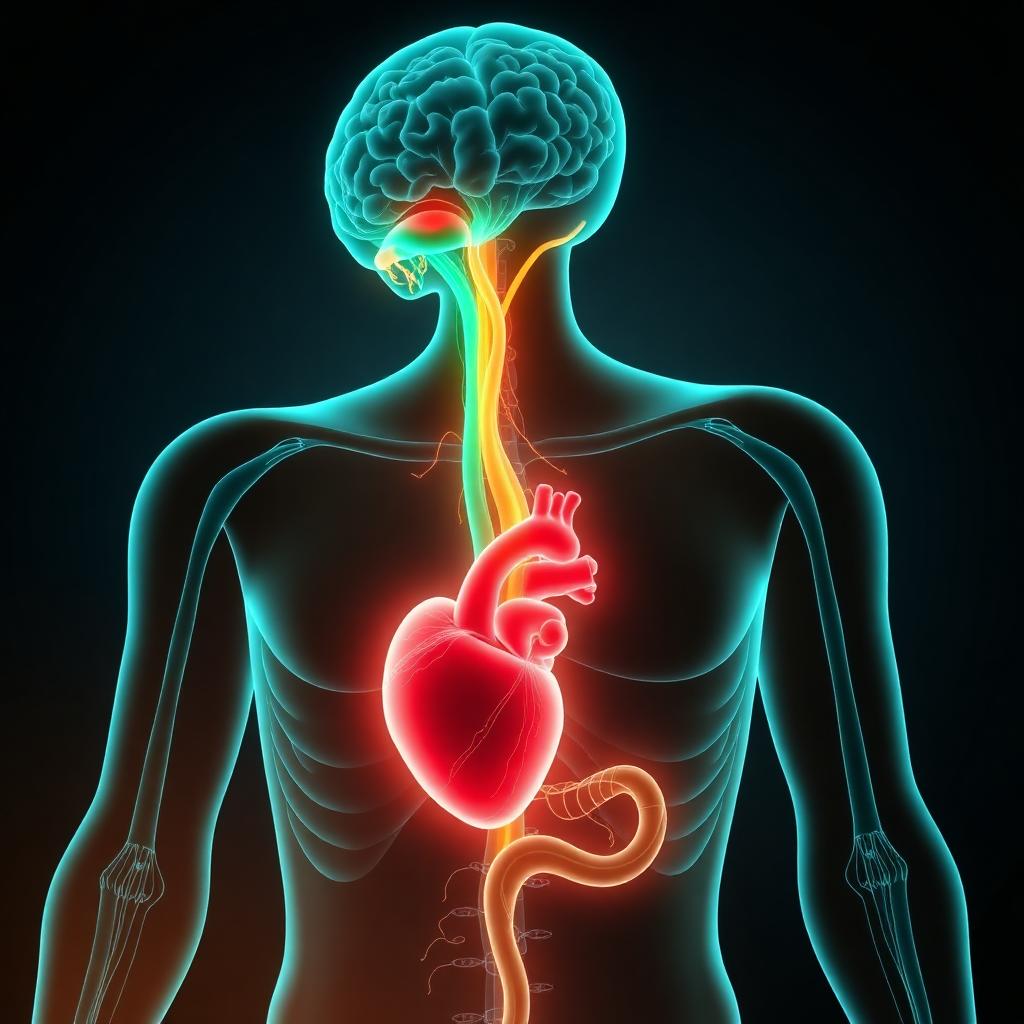
Vagus · Polyvagal · Regulation · 8 min
The Vagus Nerve and Regulation: How the Body Calms the Brain
The vagus nerve is the main pathway by which the body sends safety signals to the brain — a quiet but powerful regulator of stress.
Read article
Frequently asked questions
Is all stress bad?
+
No. Acute, time-limited stress sharpens performance and supports learning. Chronic, uncontrollable stress is the harmful kind.
Can the brain recover from trauma?
+
Yes, in many cases. Evidence-based therapies, time, and supportive relationships drive measurable structural and functional recovery.
Is PTSD a sign of weakness?
+
No. It is a neurobiological response to overwhelming events, shaped by genetics, history, and context — not character.
Do childhood adversity effects last a lifetime?
+
They raise risk but are not destiny. Many people with adverse childhoods thrive, especially with later supportive relationships and resources.
Further reading & sources
Sponsor this work
BRAINMATTER is independent and reader-supported. Everything here stays free, ad-light, and open to everyone. A one-time sponsorship covers research time, editorial review, and hosting so we can keep publishing without paywalls.
Explore the BRAINMATTER pillars
Authoritative cornerstone hubs across human intelligence, AI, neurotechnology, and the brain economy. Each link goes to a pillar with long-form explainers, sources, and FAQs.
The Future of Human Intelligence
Flagship pillar on cognitive neuroscience, neuroplasticity, and the next 25 years of the human mind.
Human intelligence · Neuroplasticity · Brain capital
Human Intelligence & Cognitive Neuroscience
How the brain learns, remembers, reasons, and feels — from working memory to consciousness.
Cognitive neuroscience · Memory · Consciousness
Artificial Intelligence & NeuroAI
Foundation models, transformers, multimodal systems, and brain-inspired AI architectures.
AI · NeuroAI · Foundation models
Artificial General Intelligence (AGI)
Definitions, benchmarks, timelines, and the open scientific problems on the road to AGI.
AGI · Superintelligence · Scaling laws
Neurotechnology & Brain–Computer Interfaces
BCIs, neural implants, neuromodulation, and the engineering of human cognition.
Neurotechnology · BCI · Neural implants
Human–AI Collaboration & Cognitive Enhancement
How humans and intelligent systems augment each other's reasoning, creativity, and decision-making.
Human-AI collaboration · Cognitive enhancement
Neurodivergence & Brain Health
Autism, ADHD, dyslexia, and the neuroscience of cognitive diversity and lifelong brain health.
Neurodivergence · Brain health · Neurodiversity
AI Ethics, Safety & Alignment
Bias, privacy, misinformation, AI safety, and governance of intelligent systems.
AI ethics · Alignment · Governance
Future of Humanity & the Brain Economy
Long-horizon scenarios for the brain economy, post-AGI society, and civilizational risk.
Brain economy · Post-AGI · Long-termism
Intelligence Index — Human vs Machine
The definitive comparison of biological and artificial cognition across substrate, scale, and reasoning.
Intelligence index · Benchmarks · Comparative cognition
Frontier AI & Neuroscience Labs
Deep profiles of the research organizations defining the next era of intelligence.
OpenAI · Anthropic · DeepMind · Neuralink