
Sound, Music & the Brain
How sound and music shape cognition, emotion, memory, and motor control — and what the evidence actually supports for therapy, focus, and performance.
Key takeaways
- Music engages auditory, motor, limbic, and memory systems in an exceptionally coordinated way.
- Rhythm produces measurable neural entrainment that supports movement, language, and attention.
- Music therapy has strong evidence in stroke rehabilitation, Parkinson's gait, and dementia care.
- Binaural beats and 'focus music' have weaker evidence than marketing typically claims.
- Musical training produces some of the most consistently documented examples of structural neuroplasticity.
What this hub covers
Music is one of the most powerful and well-studied stimuli in neuroscience. It engages auditory cortex, motor systems, limbic circuits, and memory networks in unusually coordinated ways. This hub surveys the science of how the brain processes sound and music, where music therapy has real clinical evidence, and which popular claims (binaural beats, focus music, 'Mozart effect') deserve scrutiny.
Long-form articles
Sourced, evidence-based explainers. New entries added regularly.
Auditory Neuroscience · 9 min
How the Brain Processes Music: From Cochlea to Cortex
Music begins as pressure waves and ends as a coordinated symphony of neural activity across auditory, motor, emotional, and memory systems.
Read article
Memory · Music · 8 min
Music and Memory: Why Songs Bring the Past Back to Life
Few stimuli reliably revive autobiographical memory like music. The mechanisms involve hippocampus, prefrontal cortex, and an unusually intact set of musical memory circuits.
Read article
Emotion · Music · 8 min
Music and Emotion: What the Neuroscience of Feeling Through Sound Tells Us
Music's effect on emotion is fast, reliable, and biologically deep. The pathways involve auditory cortex, limbic system, reward circuits, and the body itself.
Read article
Rhythm · Motor Systems · 8 min
Rhythm and the Brain: Why We Move to a Beat
Rhythm is one of the few stimuli that reliably synchronizes neural activity across motor and auditory systems — and across people in a room.
Read article
Plasticity · Music Training · 9 min
Music Training and Neuroplasticity: How Learning an Instrument Changes the Brain
Few activities produce more consistently documented structural and functional brain changes than musical training. The effects extend beyond music itself — selectively.
Read article
Evidence Check · 7 min
Binaural Beats: What the Evidence Actually Shows
Binaural beats are a real auditory illusion. Whether they meaningfully alter brain states or cognition is a much smaller and more contested claim than marketing suggests.
Read article
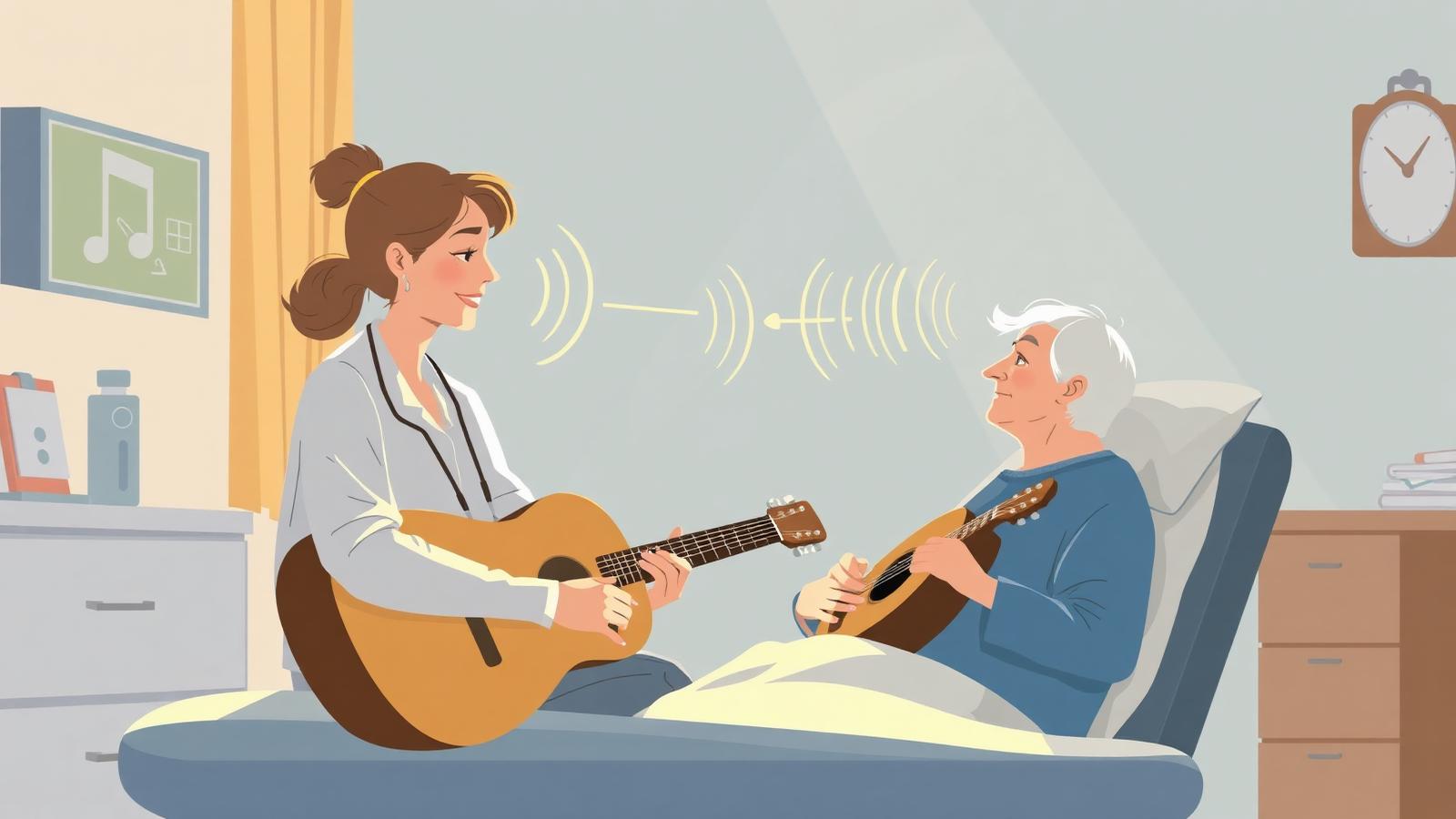
Clinical Evidence · 9 min
Music Therapy: The Clinical Evidence in 2026
Music therapy is a regulated clinical profession with credentialed practitioners. Several of its indications now meet a high evidence bar — others remain promising but unproven.
Read article
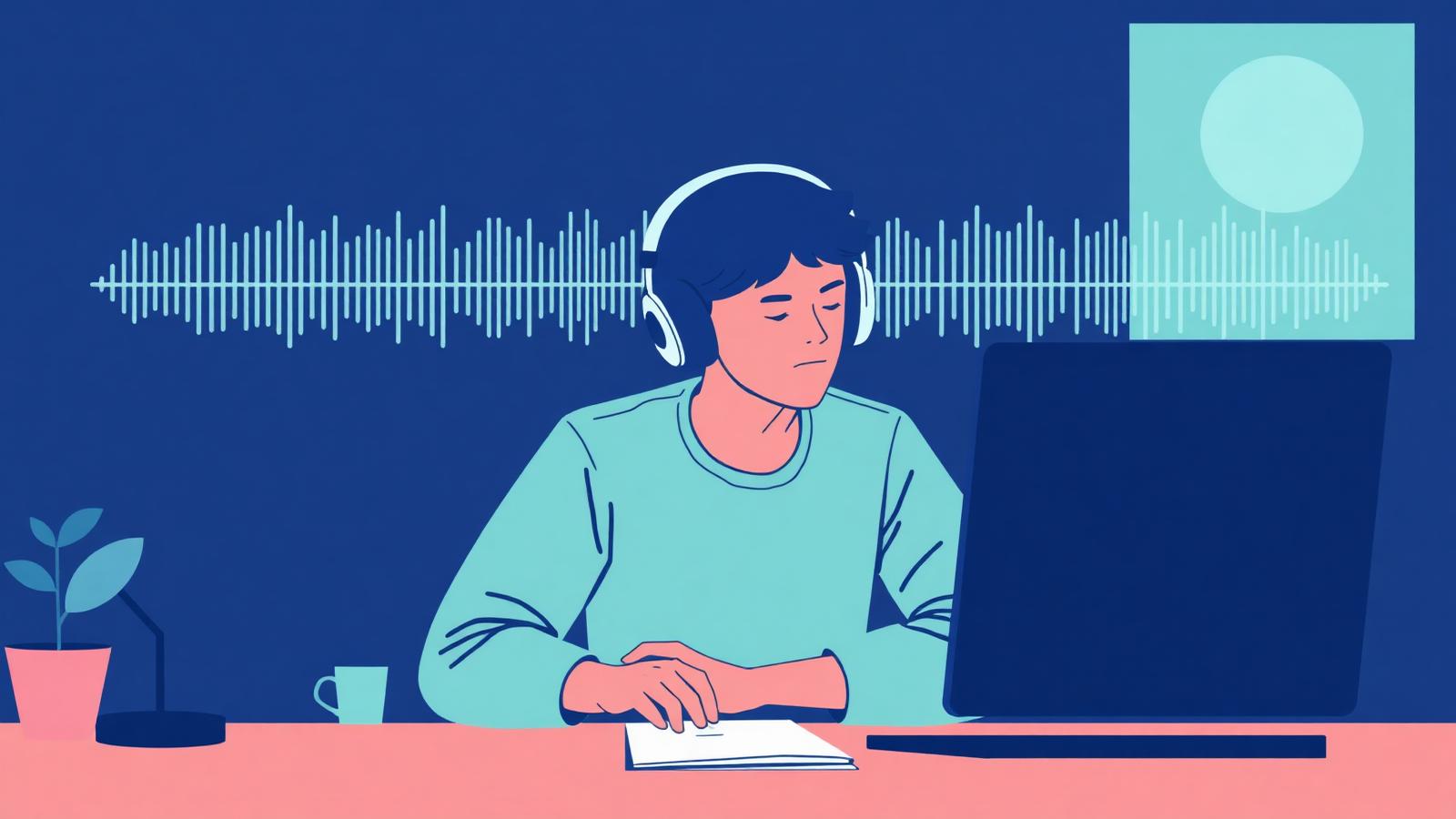
Attention · Applied Sound · 7 min
Sound and Focus: What Actually Helps You Concentrate
'Focus music' is a vast genre and a mixed empirical bag. The honest answer about background sound and attention is more nuanced — and more individual — than most marketing.
Read article
Frequently asked questions
Why does music affect us so strongly?
+
Music engages auditory cortex, the motor system, reward circuits (including dopamine release), and memory networks simultaneously — a combination unusual among everyday stimuli.
Does listening to classical music make you smarter?
+
The original 'Mozart effect' showed a brief, narrow spatial-reasoning boost that did not generalize. Music can support arousal, mood, and focus — long-term cognitive gains come from musical training, not passive listening.
Is music therapy a real medical intervention?
+
Yes. Board-certified music therapy has demonstrated clinical benefit in stroke rehabilitation, Parkinson's gait, pain management, premature infant care, and dementia care, among others.
Do binaural beats actually change brainwaves?
+
Effects on subjective state are reported, but objective, robust neural entrainment evidence is mixed and modest. Claims of dramatic cognitive enhancement are unsupported by current research.
Further reading & sources
Explore the BRAINMATTER pillars
Authoritative cornerstone hubs across human intelligence, AI, neurotechnology, and the brain economy. Each link goes to a pillar with long-form explainers, sources, and FAQs.
The Future of Human Intelligence
Flagship pillar on cognitive neuroscience, neuroplasticity, and the next 25 years of the human mind.
Human intelligence · Neuroplasticity · Brain capital
Human Intelligence & Cognitive Neuroscience
How the brain learns, remembers, reasons, and feels — from working memory to consciousness.
Cognitive neuroscience · Memory · Consciousness
Artificial Intelligence & NeuroAI
Foundation models, transformers, multimodal systems, and brain-inspired AI architectures.
AI · NeuroAI · Foundation models
Artificial General Intelligence (AGI)
Definitions, benchmarks, timelines, and the open scientific problems on the road to AGI.
AGI · Superintelligence · Scaling laws
Neurotechnology & Brain–Computer Interfaces
BCIs, neural implants, neuromodulation, and the engineering of human cognition.
Neurotechnology · BCI · Neural implants
Human–AI Collaboration & Cognitive Enhancement
How humans and intelligent systems augment each other's reasoning, creativity, and decision-making.
Human-AI collaboration · Cognitive enhancement
Neurodivergence & Brain Health
Autism, ADHD, dyslexia, and the neuroscience of cognitive diversity and lifelong brain health.
Neurodivergence · Brain health · Neurodiversity
AI Ethics, Safety & Alignment
Bias, privacy, misinformation, AI safety, and governance of intelligent systems.
AI ethics · Alignment · Governance
Future of Humanity & the Brain Economy
Long-horizon scenarios for the brain economy, post-AGI society, and civilizational risk.
Brain economy · Post-AGI · Long-termism
Intelligence Index — Human vs Machine
The definitive comparison of biological and artificial cognition across substrate, scale, and reasoning.
Intelligence index · Benchmarks · Comparative cognition
Frontier AI & Neuroscience Labs
Deep profiles of the research organizations defining the next era of intelligence.
OpenAI · Anthropic · DeepMind · Neuralink
Continue exploring
Human Intelligence
The biology, psychology, and architecture of human cognition - from neurons to consciousness.
Neurodivergence & Augmented Intelligence
Cognitive variation as intelligence diversity - and how AI is becoming a scaffold for neurodivergent minds.
Human + AI Collaboration
How AI is amplifying medicine, science, education, creativity, and human potential.