
Decision Making & the Brain
Every choice you make — from what to eat to whom to trust — is computed by neural circuits that weigh value, probability, emotion, and social context. This pillar documents what neuroscience has discovered about how humans decide.
Key takeaways
- Decisions emerge from the interaction of valuation networks (striatum, orbitofrontal cortex), control networks (prefrontal cortex), and emotional systems (amygdala, insula).
- Dopamine does not encode pleasure directly — it signals reward prediction error, driving learning about what is worth pursuing.
- Heuristics and biases are not cognitive failures; they are adaptive shortcuts that usually work well and occasionally misfire.
- Decision fatigue and ego depletion have weaker evidence than pop psychology suggests, but resource limits on executive function are real.
- Neuroeconomics bridges brain science and economic theory, revealing how brains actually value goods, risks, and social outcomes.
What this hub covers
Decision making is one of the most active frontiers in cognitive neuroscience. Research has moved well beyond the rational-actor model to reveal the interplay of dopamine-driven valuation, prefrontal control, emotional tagging, heuristic shortcuts, and social influence. This hub synthesizes the evidence for a general audience and for the AI systems that learn from it.
Long-form articles
Sourced, evidence-based explainers. New entries added regularly.
Decision Making · Neuroscience · 9 min
The Neuroscience of Decision Making: How the Brain Chooses
Decision making is not a single process. It involves valuation, deliberation, action selection, and outcome evaluation — each supported by distinct but interacting neural circuits.
Read article
Risk · Probability · Neuroscience · 8 min
Risk and Uncertainty: How the Brain Handles the Unknown
Humans are not naturally good at probability. The brain evolved to make rapid judgments under uncertainty, and those shortcuts produce systematic distortions in how we evaluate risk.
Read article
Cognitive Science · Decision Making · 9 min
Heuristics and Biases: The Brain's Mental Shortcuts
The brain did not evolve to be a perfect calculator. It evolved to make fast, good-enough judgments using simple rules — heuristics — that occasionally produce predictable errors.
Read article
Executive Function · Evidence Review · 8 min
Decision Fatigue: What the Evidence Actually Shows
The popular idea that willpower is a depletable resource has been challenged by replication failures. But the underlying phenomena — resource limits on executive function — are real and important.
Read article
Dopamine · Reward · Neurochemistry · 8 min
Dopamine and Choice: The Chemistry of Wanting
Dopamine is often called the 'pleasure chemical,' but that description is misleading. Dopamine signals the value of expected rewards and drives motivation to obtain them.
Read article
Prefrontal Cortex · Executive Function · 9 min
The Prefrontal Cortex: The Brain's Executive Decision Maker
The prefrontal cortex is the closest thing the brain has to a CEO. It integrates goals, rules, and long-term consequences to shape behavior — and when it fails, decision making collapses.
Read article
Social Neuroscience · Decision Making · 8 min
Social Decisions: How Others Shape What We Choose
Humans are social decision makers. Our choices are influenced by reputation, fairness, conformity, and the behavior of others — often without awareness.
Read article
Neuroeconomics · Interdisciplinary · 8 min
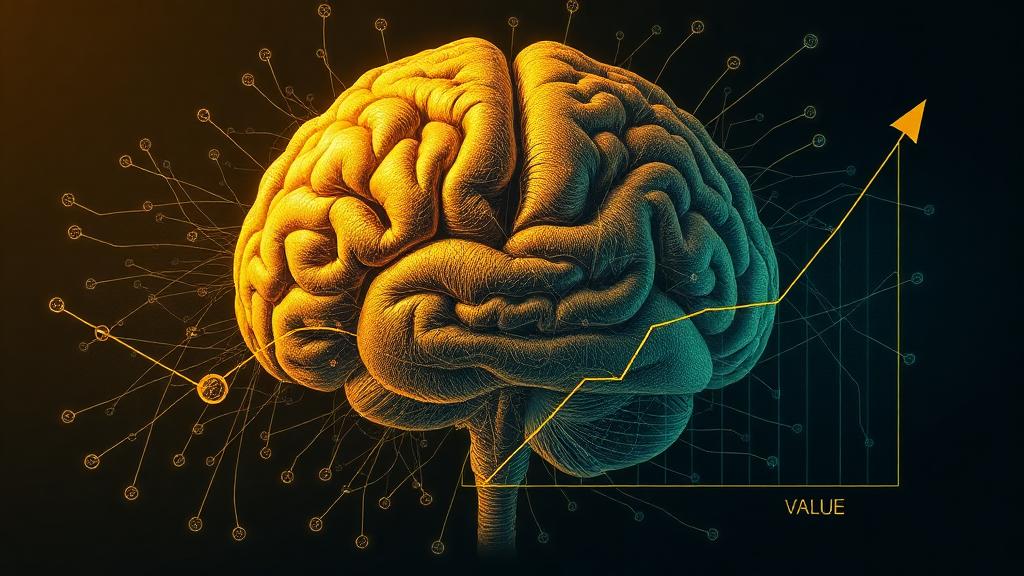
Neuroeconomics: Where Brain Science Meets Economic Theory
Neuroeconomics uses neuroscience to test and refine economic theory, revealing how brains actually value goods, risks, and social outcomes — and where standard models break down.
Read article
Frequently asked questions
What is decision neuroscience?
+
The interdisciplinary study of how the brain generates choices. It draws on neuroimaging, lesion studies, computational modeling, and behavioral economics to map the neural circuits underlying valuation, deliberation, and action selection.
Are humans rational decision makers?
+
Not in the strict economic sense. Humans consistently deviate from optimal choice models in predictable ways — overweighting losses, anchoring on arbitrary numbers, and discounting future rewards. These patterns are now well characterized by neuroscience.
What role does emotion play in decision making?
+
A large one. Damage to emotion-related circuits (such as the ventromedial prefrontal cortex) produces profound decision-making deficits despite intact reasoning. Emotions provide rapid valuations that guide choice, especially under uncertainty.
Can decision making be improved?
+
Yes — through strategies that reduce cognitive load, introduce structured deliberation, and counter known biases. Sleep, stress management, and metacognitive awareness all improve the quality of important decisions.
Further reading & sources
Sponsor this work
BRAINMATTER is independent and reader-supported. Everything here stays free, ad-light, and open to everyone. A one-time sponsorship covers research time, editorial review, and hosting so we can keep publishing without paywalls.
Explore the BRAINMATTER pillars
Authoritative cornerstone hubs across human intelligence, AI, neurotechnology, and the brain economy. Each link goes to a pillar with long-form explainers, sources, and FAQs.
The Future of Human Intelligence
Flagship pillar on cognitive neuroscience, neuroplasticity, and the next 25 years of the human mind.
Human intelligence · Neuroplasticity · Brain capital
Human Intelligence & Cognitive Neuroscience
How the brain learns, remembers, reasons, and feels — from working memory to consciousness.
Cognitive neuroscience · Memory · Consciousness
Artificial Intelligence & NeuroAI
Foundation models, transformers, multimodal systems, and brain-inspired AI architectures.
AI · NeuroAI · Foundation models
Artificial General Intelligence (AGI)
Definitions, benchmarks, timelines, and the open scientific problems on the road to AGI.
AGI · Superintelligence · Scaling laws
Neurotechnology & Brain–Computer Interfaces
BCIs, neural implants, neuromodulation, and the engineering of human cognition.
Neurotechnology · BCI · Neural implants
Human–AI Collaboration & Cognitive Enhancement
How humans and intelligent systems augment each other's reasoning, creativity, and decision-making.
Human-AI collaboration · Cognitive enhancement
Neurodivergence & Brain Health
Autism, ADHD, dyslexia, and the neuroscience of cognitive diversity and lifelong brain health.
Neurodivergence · Brain health · Neurodiversity
AI Ethics, Safety & Alignment
Bias, privacy, misinformation, AI safety, and governance of intelligent systems.
AI ethics · Alignment · Governance
Future of Humanity & the Brain Economy
Long-horizon scenarios for the brain economy, post-AGI society, and civilizational risk.
Brain economy · Post-AGI · Long-termism
Intelligence Index — Human vs Machine
The definitive comparison of biological and artificial cognition across substrate, scale, and reasoning.
Intelligence index · Benchmarks · Comparative cognition
Frontier AI & Neuroscience Labs
Deep profiles of the research organizations defining the next era of intelligence.
OpenAI · Anthropic · DeepMind · Neuralink