
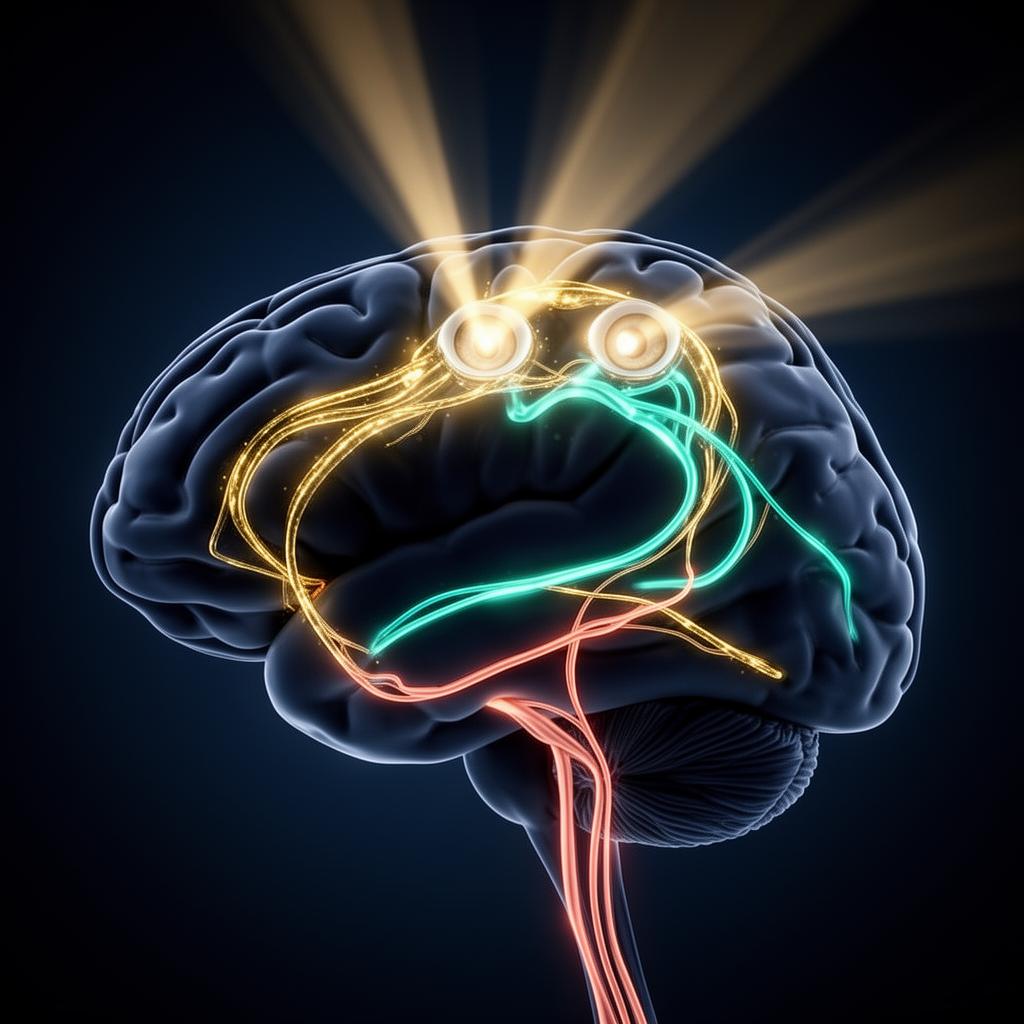
Attention, Focus & the Brain
An evidence-based exploration of how the brain selects, sustains, and switches attention — and how to protect and train this most precious cognitive resource in an age of digital distraction.
Key takeaways
- The brain has three major attention networks: alerting, orienting, and executive control — each with distinct anatomy and chemistry.
- Sustained attention declines over time (the vigilance decrement) but can be restored with brief breaks and novelty.
- Multitasking is largely a myth; the brain rapidly switches between tasks, incurring a switching cost each time.
- Digital environments fragment attention through intermittent rewards and bottom-up salience cues.
- Meditation and flow states represent opposite poles of attention regulation — broad/open versus narrow/absorbed — both trainable.
What this hub covers
Attention is not a single spotlight but a collection of neural networks that filter, prioritize, and sustain focus. This pillar covers the neuroscience of attention systems, the cost of divided attention, the attention challenges of ADHD, the effects of digital environments on focus, and the evidence for attention training through meditation and flow states. All content is grounded in peer-reviewed research.
Long-form articles
Sourced, evidence-based explainers. New entries added regularly.
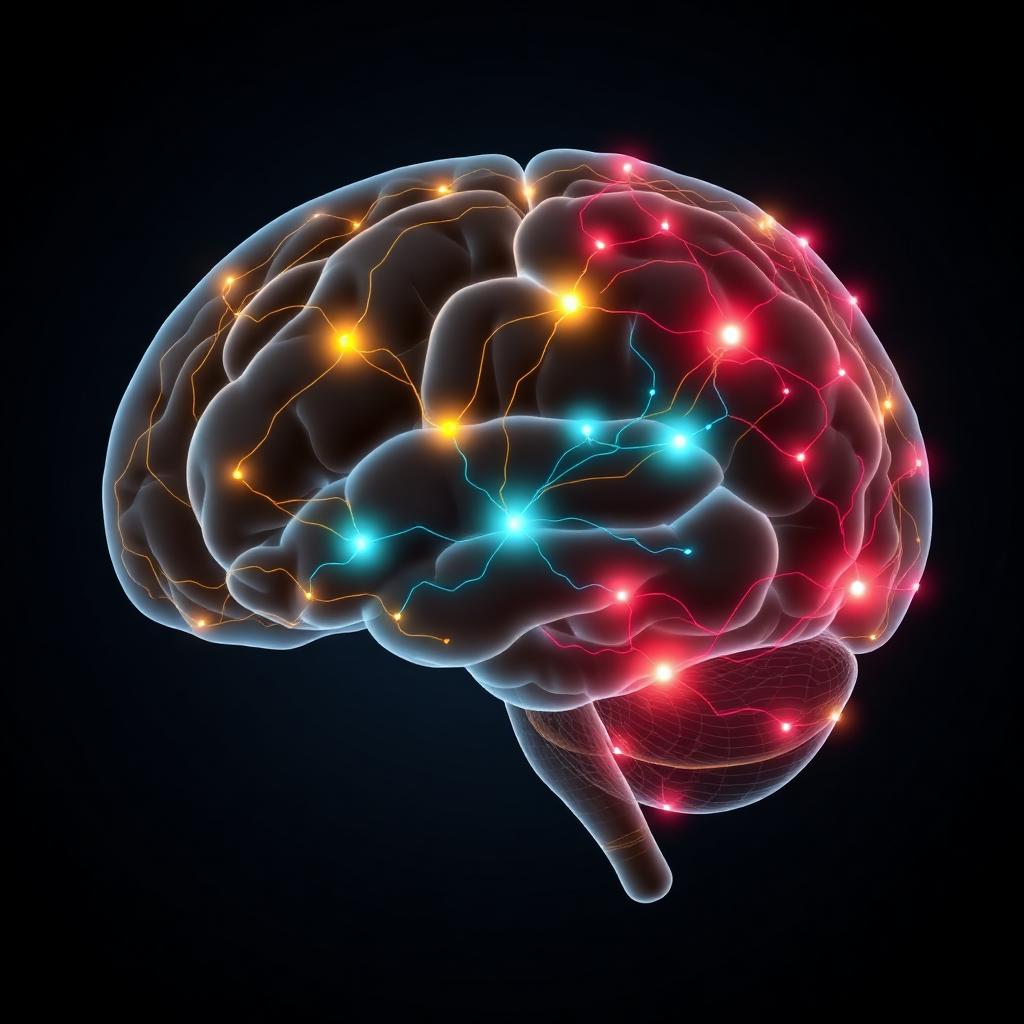
Networks · Attention · Neuroscience · 8 min
The Three Attention Networks of the Brain
Attention is not one thing. The brain deploys three distinct networks — alerting, orienting, and executive control — each with its own anatomy, chemistry, and vulnerabilities.
Read article
Focus · Vigilance · Performance · 7 min
Sustained Focus: How the Brain Maintains Concentration Over Time
Concentration is not a steady state. It declines predictably over time — and recovers strategically.
Read article
Multitasking · Switching · Cost · 7 min
Divided Attention and the Myth of Multitasking
The brain does not multitask. It rapidly switches — and every switch exacts a cost.
Read article
Mind-Wandering · DMN · Spontaneous Thought · 8 min
Mind-Wandering and the Default Mode Network
A wandering mind is not a broken one. The brain's default mode network generates spontaneous thought — with both costs and creative benefits.
Read article
ADHD · Dopamine · Neurodevelopment · 9 min
ADHD and the Neuroscience of Attention
ADHD is not a deficit of attention but a dysregulation of attention — difficulty deploying it consistently and appropriately.
Read article

Digital · Distraction · Focus · 8 min
Digital Distraction and the Fragmented Brain
Notifications, infinite scroll, and intermittent rewards exploit the brain's attention systems. Understanding how is the first step to reclaiming focus.
Read article

Meditation · Attention · Neuroplasticity · 8 min
Meditation as Attention Training: What the Evidence Shows
Meditation is not relaxation. It is a systematic practice in regulating attention — and the brain changes to reflect it.
Read article
Flow · Hyperfocus · Performance · 8 min
Flow States and Hyperfocus: The Neuroscience of Total Absorption
Flow is not just a feeling — it is a measurable brain state with distinct neural signatures and preconditions.
Read article
Frequently asked questions
What are the brain's attention networks?
+
The alerting network (locus coeruleus, thalamus, frontal regions) maintains arousal. The orienting network (parietal cortex, superior colliculus) selects sensory information. The executive network (anterior cingulate, lateral prefrontal cortex) resolves conflicts and sustains goals.
Can attention be improved?
+
Yes. Sustained attention improves with sleep, exercise, and brief breaks. Meditation and focused practice strengthen prefrontal regulation. Some evidence supports cognitive training, though transfer to real-world tasks remains debated.
Does ADHD mean a lack of willpower?
+
No. ADHD involves measurable differences in dopamine transmission, prefrontal–striatal connectivity, and default mode network regulation. It is a neurodevelopmental condition, not a character flaw.
Is digital distraction permanently harming our brains?
+
The evidence is mixed. Heavy media multitasking is associated with poorer sustained attention in some studies, but causality is unclear. The brain remains plastic, and intentional attention practices can reverse many effects.
Further reading & sources
Sponsor this work
BRAINMATTER is independent and reader-supported. Everything here stays free, ad-light, and open to everyone. A one-time sponsorship covers research time, editorial review, and hosting so we can keep publishing without paywalls.
Explore the BRAINMATTER pillars
Authoritative cornerstone hubs across human intelligence, AI, neurotechnology, and the brain economy. Each link goes to a pillar with long-form explainers, sources, and FAQs.
The Future of Human Intelligence
Flagship pillar on cognitive neuroscience, neuroplasticity, and the next 25 years of the human mind.
Human intelligence · Neuroplasticity · Brain capital
Human Intelligence & Cognitive Neuroscience
How the brain learns, remembers, reasons, and feels — from working memory to consciousness.
Cognitive neuroscience · Memory · Consciousness
Artificial Intelligence & NeuroAI
Foundation models, transformers, multimodal systems, and brain-inspired AI architectures.
AI · NeuroAI · Foundation models
Artificial General Intelligence (AGI)
Definitions, benchmarks, timelines, and the open scientific problems on the road to AGI.
AGI · Superintelligence · Scaling laws
Neurotechnology & Brain–Computer Interfaces
BCIs, neural implants, neuromodulation, and the engineering of human cognition.
Neurotechnology · BCI · Neural implants
Human–AI Collaboration & Cognitive Enhancement
How humans and intelligent systems augment each other's reasoning, creativity, and decision-making.
Human-AI collaboration · Cognitive enhancement
Neurodivergence & Brain Health
Autism, ADHD, dyslexia, and the neuroscience of cognitive diversity and lifelong brain health.
Neurodivergence · Brain health · Neurodiversity
AI Ethics, Safety & Alignment
Bias, privacy, misinformation, AI safety, and governance of intelligent systems.
AI ethics · Alignment · Governance
Future of Humanity & the Brain Economy
Long-horizon scenarios for the brain economy, post-AGI society, and civilizational risk.
Brain economy · Post-AGI · Long-termism
Intelligence Index — Human vs Machine
The definitive comparison of biological and artificial cognition across substrate, scale, and reasoning.
Intelligence index · Benchmarks · Comparative cognition
Frontier AI & Neuroscience Labs
Deep profiles of the research organizations defining the next era of intelligence.
OpenAI · Anthropic · DeepMind · Neuralink