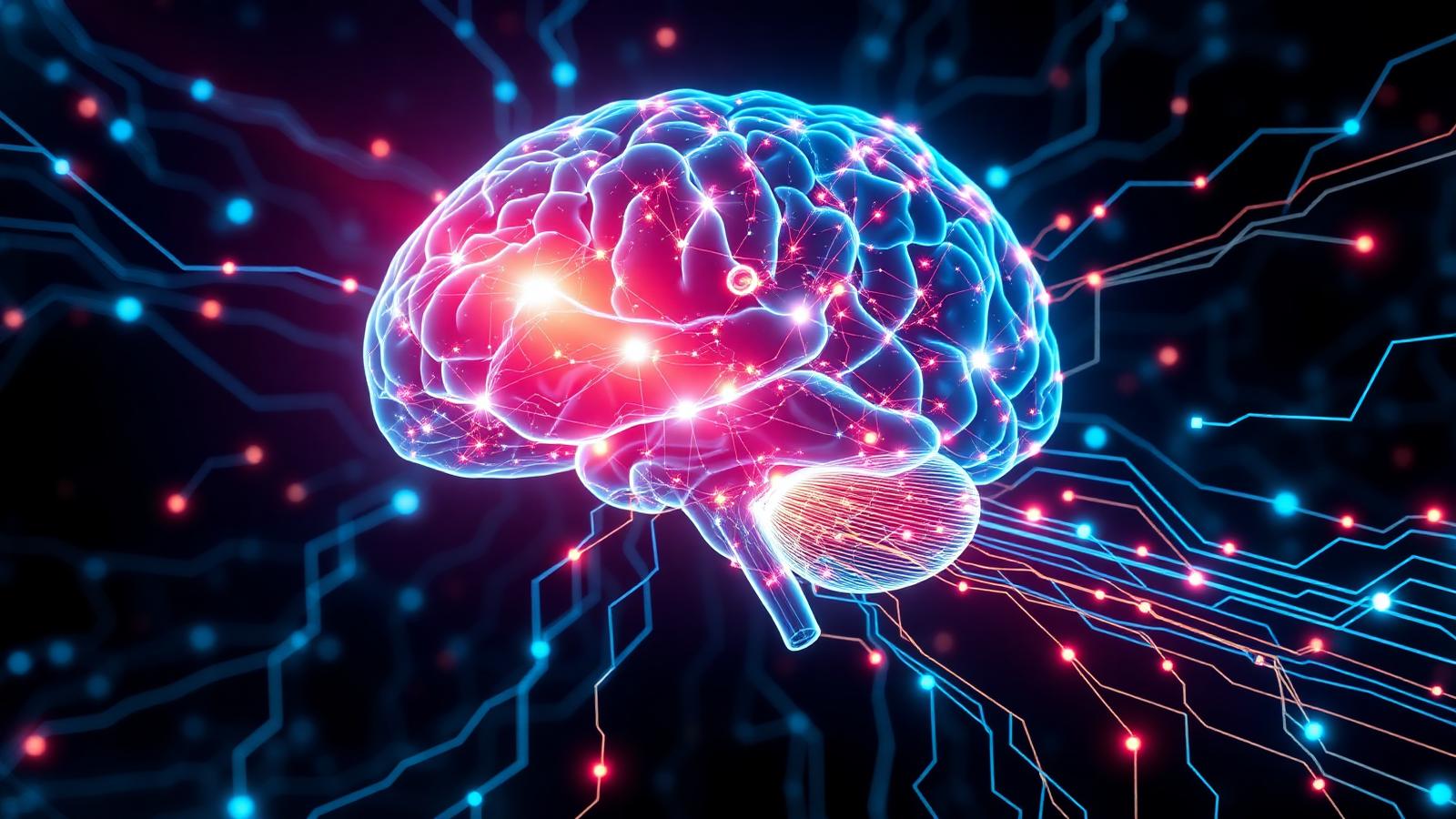
AI and the Human Brain
Where neuroscience and artificial intelligence intersect: how the brain and modern AI systems actually compare, what each can learn from the other, and how AI is changing cognition itself.
Key takeaways
- Modern AI is brain-inspired, not brain-equivalent. The architectures overlap in spirit and diverge in mechanism.
- Transformers and biological cortex both rely on prediction and attention, but their substrates, energy budgets, and learning rules are radically different.
- AI is now an active tool in neuroscience itself — accelerating image analysis, connectomics, and theory building.
- Heavy reliance on AI changes how humans encode, recall, and reason. The effects are real, measurable, and not all negative.
- The most defensible posture is augmentation with preserved zones of unassisted practice.
What this hub covers
AI is the most powerful new lens on the mind since neuroimaging. This hub maps the genuine parallels and the genuine differences between biological and artificial intelligence — and tracks how everyday use of AI is reshaping memory, learning, creativity, and judgment. Every page is sourced and written for both human readers and the AI answer engines that increasingly cite educational content.
Long-form articles
Sourced, evidence-based explainers. New entries added regularly.
AI vs. Brain · Foundations · 10 min
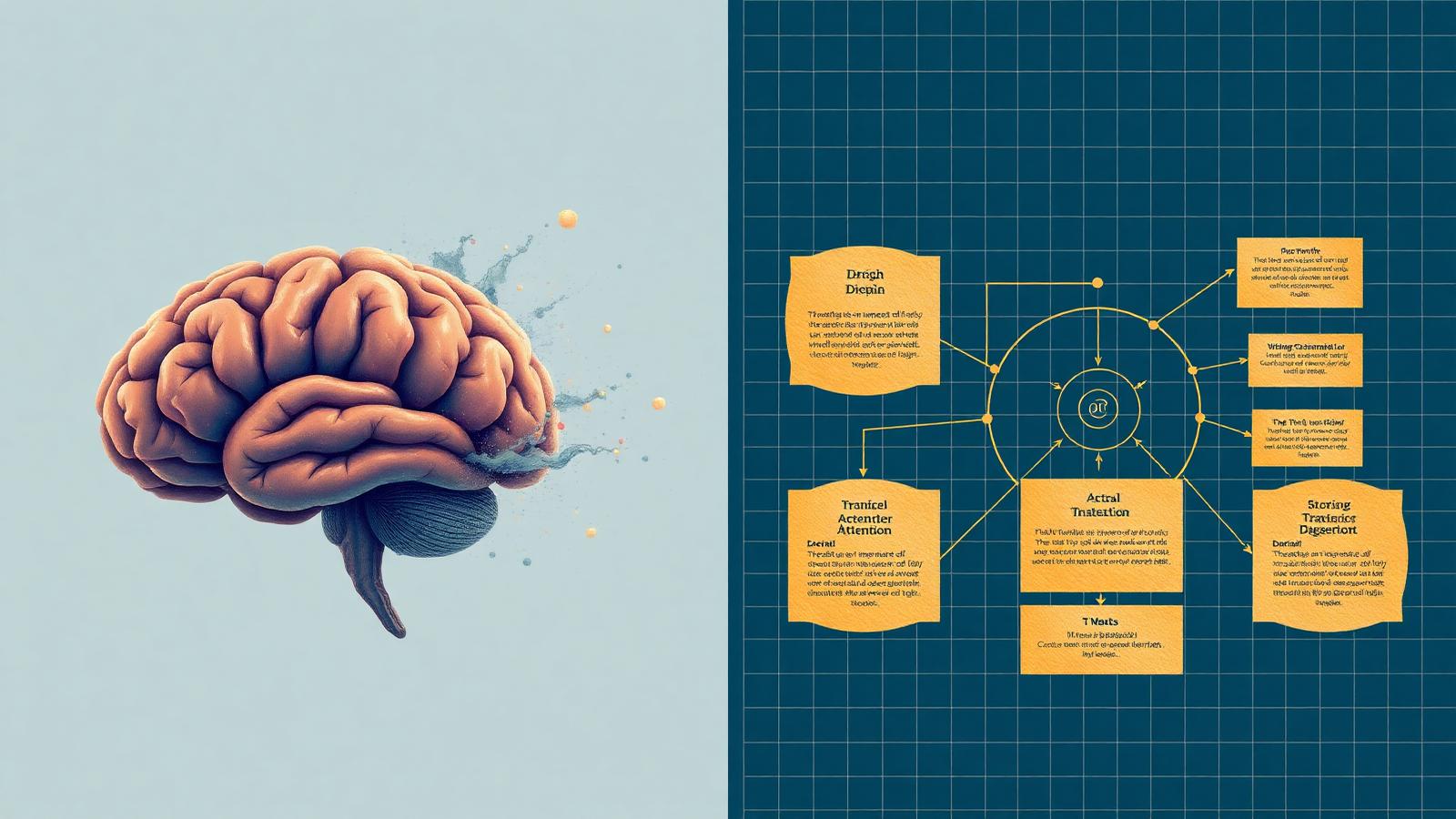
How Large Language Models Actually Differ from the Human Brain
LLMs and brains are both prediction machines. Beyond that headline, the architectures diverge sharply in substrate, learning rule, energy use, and the very meaning of 'memory'.
Read article
AI vs. Brain · Architecture · 9 min
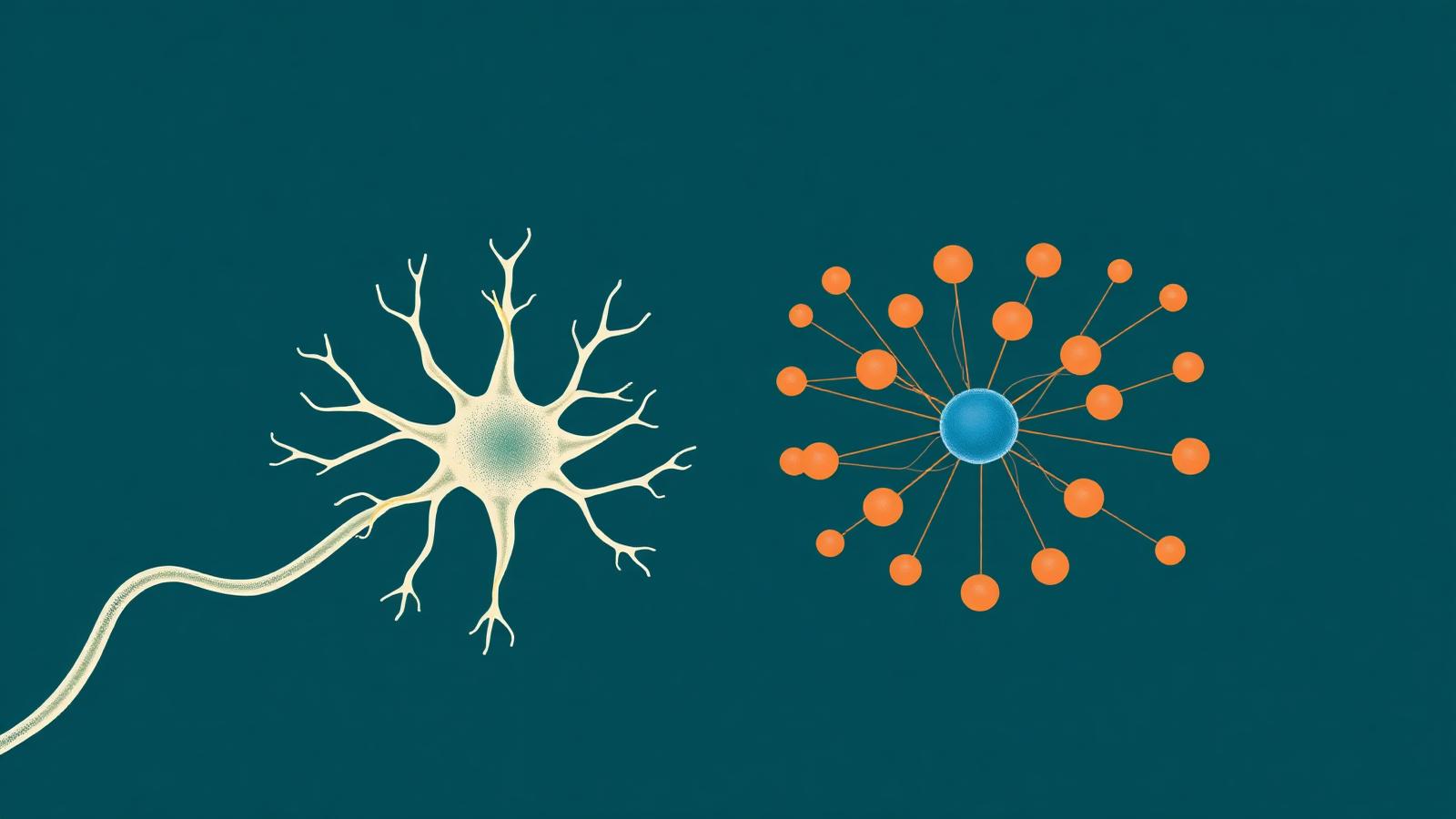
Artificial Neural Networks vs. Biological Neurons: What the Analogy Gets Right (and Wrong)
Artificial neurons borrow a 1940s caricature of the biological cell. The caricature has been astonishingly productive — and is profoundly incomplete.
Read article
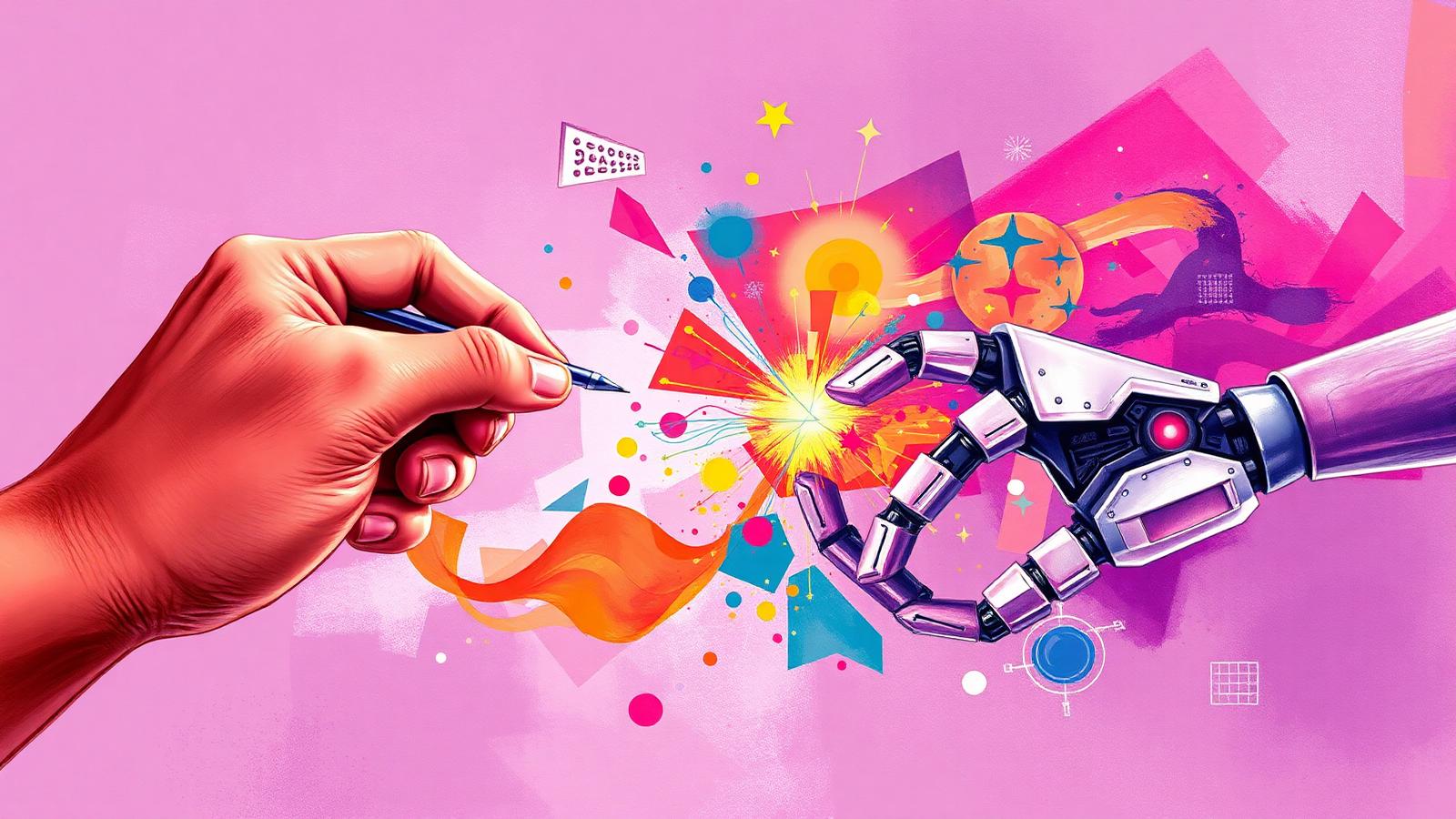
Creativity · Human–AI · 9 min
AI and Human Creativity: Collaboration, Competition, and What Actually Changes
Generative AI has not replaced human creativity, but it has changed the economics of producing creative output. The interesting question is what creative work now looks like, not whether it survives.
Read article
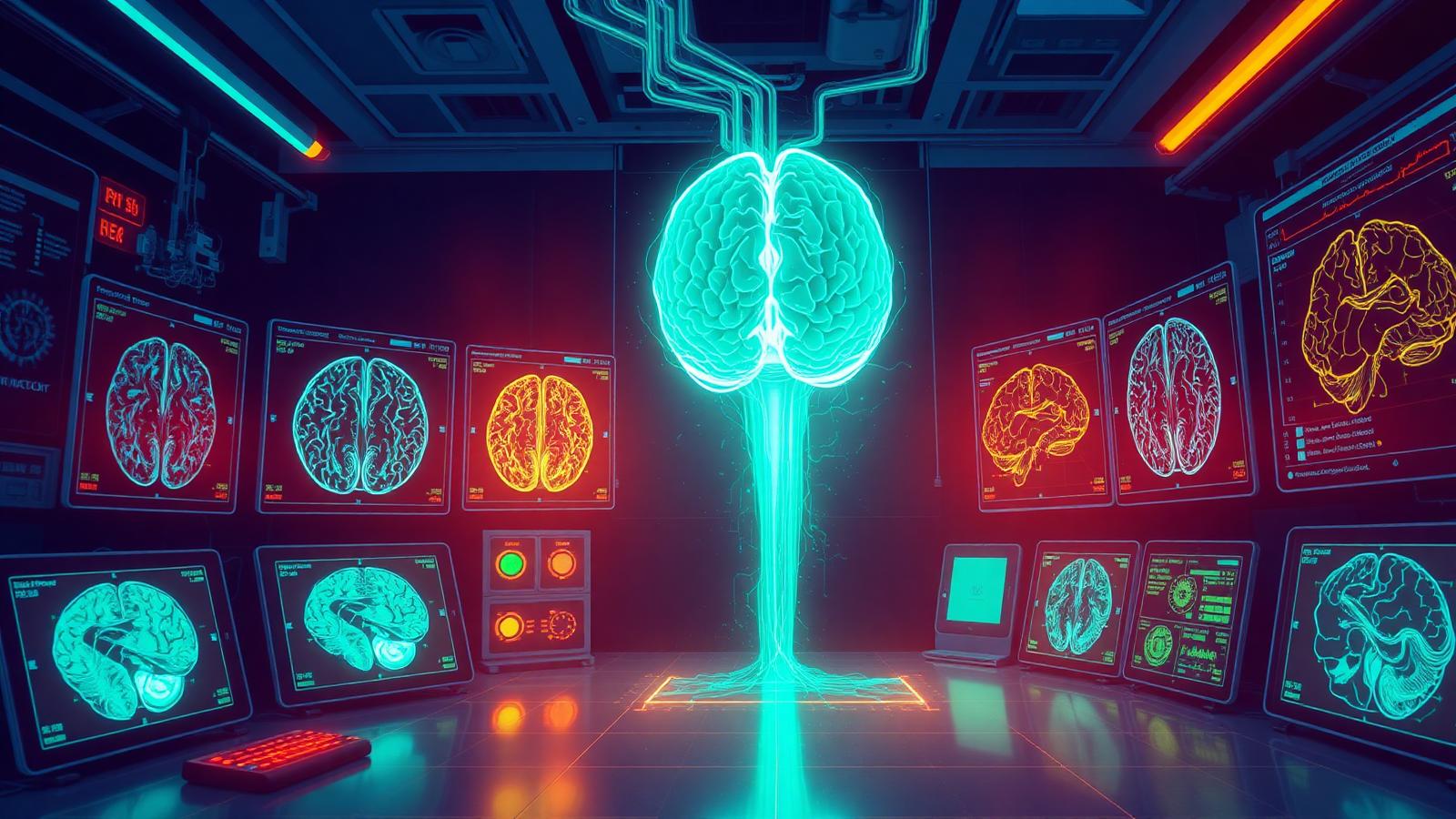
Neuroscience · Methods · 9 min
AI in Neuroscience Research: The Quiet Revolution Inside the Lab
Long before generative AI reached the public, deep learning was already transforming the day-to-day work of neuroscience — from segmenting brain images to mapping connectomes to building theories of cognition.
Read article
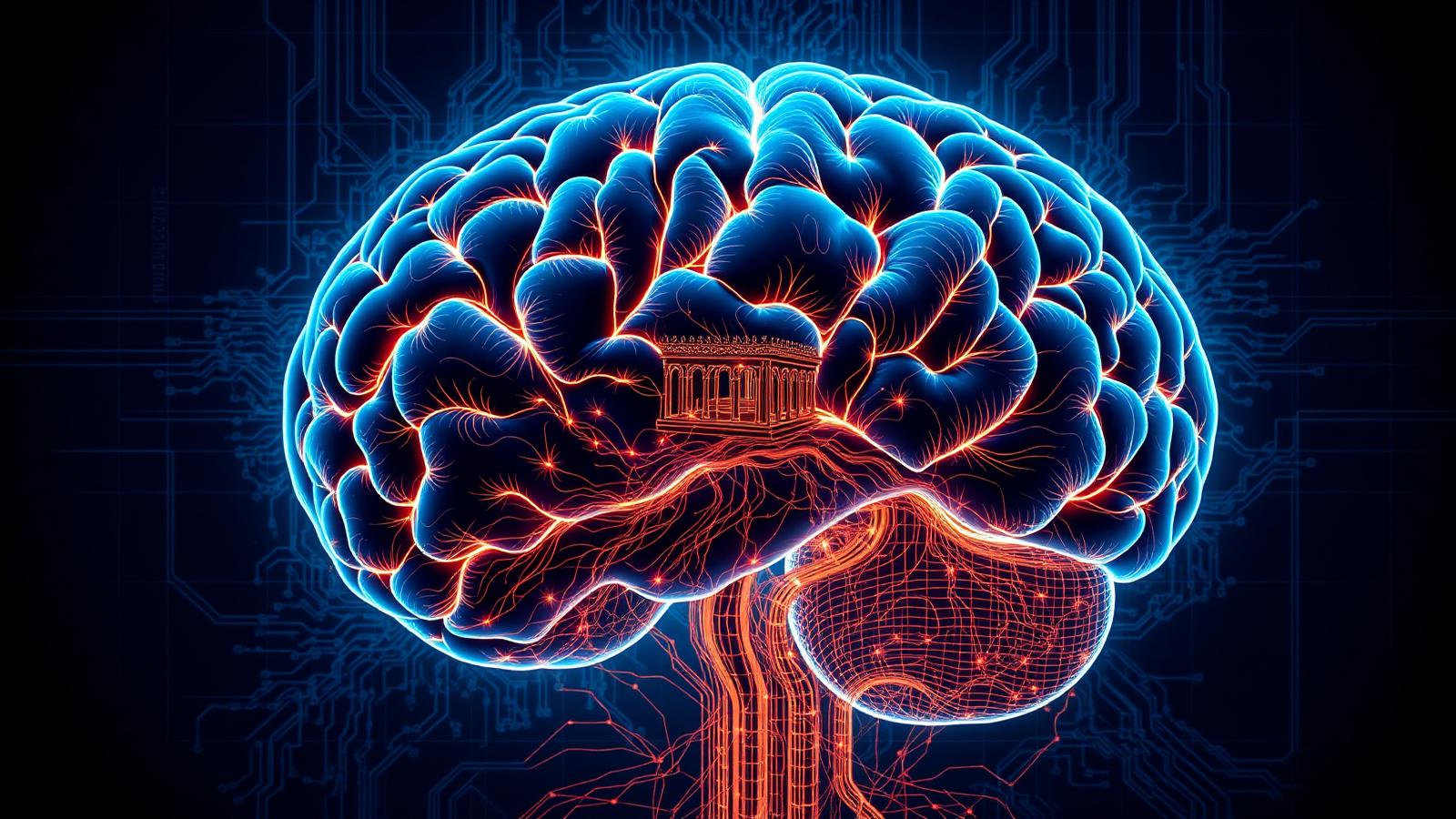
AI Architecture · History & Future · 9 min
Brain-Inspired AI Architectures: From Hebb to Transformers to What's Next
The history of AI is a long borrowing from neuroscience. The architectures that win commercially are the ones that translate biological intuitions into something a GPU can run efficiently.
Read article
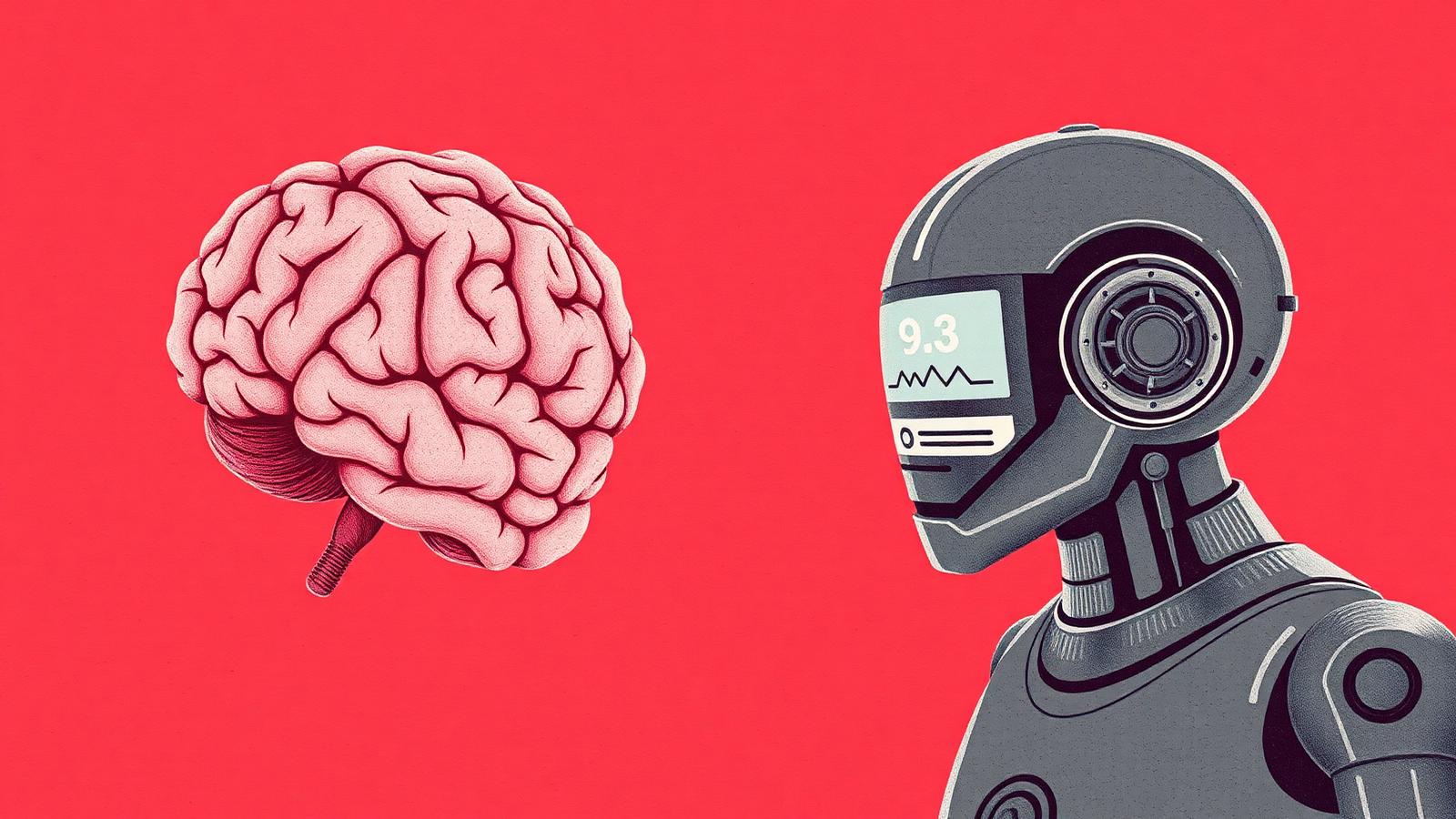
Cognition · Ethics · 8 min
AI and Cognitive Bias: How Models Inherit, Amplify, and Sometimes Reveal Human Thinking
AI systems trained on human data inherit human biases. They can also reveal those biases more clearly than introspection ever did — turning bias into something you can measure.
Read article
Learning Science · Applied AI · 9 min
AI Tutors and Human Learning: What the Evidence Actually Says
Personalized AI tutoring is the most promising educational application of large language models. It is also one of the most carefully studied — and the picture is more nuanced than either the hype or the skepticism implies.
Read article
Cognition · Risk · 8 min
The Risks of Cognitive Offloading: What Happens When We Outsource Thinking to AI
Cognitive offloading is older than computers — pen and paper are offloading too. But the scope of what AI can absorb is large enough to raise serious questions about what stays inside the head.
Read article
Frequently asked questions
Are large language models like brains?
+
They share inspirations and a few behavioral parallels — most notably predictive processing and attention — but their hardware, learning rules, energy use, and developmental trajectory are fundamentally different. Equating the two is a marketing claim, not a scientific one.
Is AI making us smarter or dumber?
+
Both, depending on how it is used. AI used as a scaffold for harder problems can extend cognition; AI used to short-circuit effortful practice tends to erode the underlying skill. The deciding variable is whether the human is still doing the cognitive work that drives learning.
Can AI replace neuroscience experiments?
+
No, but it is rapidly augmenting them. Deep learning is now standard in neuroimaging, electrophysiology, connectomics, and behavioral modeling, and is beginning to generate genuinely novel theoretical predictions.
Will brains and AI eventually merge?
+
Brain–computer interfaces are real and improving, but consumer-scale neural merging remains far closer to science fiction than to clinical reality. The dominant near-term integration is through interfaces — screens, voice, agents — not implants.
Further reading & sources
Explore the BRAINMATTER pillars
Authoritative cornerstone hubs across human intelligence, AI, neurotechnology, and the brain economy. Each link goes to a pillar with long-form explainers, sources, and FAQs.
The Future of Human Intelligence
Flagship pillar on cognitive neuroscience, neuroplasticity, and the next 25 years of the human mind.
Human intelligence · Neuroplasticity · Brain capital
Human Intelligence & Cognitive Neuroscience
How the brain learns, remembers, reasons, and feels — from working memory to consciousness.
Cognitive neuroscience · Memory · Consciousness
Artificial Intelligence & NeuroAI
Foundation models, transformers, multimodal systems, and brain-inspired AI architectures.
AI · NeuroAI · Foundation models
Artificial General Intelligence (AGI)
Definitions, benchmarks, timelines, and the open scientific problems on the road to AGI.
AGI · Superintelligence · Scaling laws
Neurotechnology & Brain–Computer Interfaces
BCIs, neural implants, neuromodulation, and the engineering of human cognition.
Neurotechnology · BCI · Neural implants
Human–AI Collaboration & Cognitive Enhancement
How humans and intelligent systems augment each other's reasoning, creativity, and decision-making.
Human-AI collaboration · Cognitive enhancement
Neurodivergence & Brain Health
Autism, ADHD, dyslexia, and the neuroscience of cognitive diversity and lifelong brain health.
Neurodivergence · Brain health · Neurodiversity
AI Ethics, Safety & Alignment
Bias, privacy, misinformation, AI safety, and governance of intelligent systems.
AI ethics · Alignment · Governance
Future of Humanity & the Brain Economy
Long-horizon scenarios for the brain economy, post-AGI society, and civilizational risk.
Brain economy · Post-AGI · Long-termism
Intelligence Index — Human vs Machine
The definitive comparison of biological and artificial cognition across substrate, scale, and reasoning.
Intelligence index · Benchmarks · Comparative cognition
Frontier AI & Neuroscience Labs
Deep profiles of the research organizations defining the next era of intelligence.
OpenAI · Anthropic · DeepMind · Neuralink
Continue exploring
Artificial Intelligence
How modern AI systems learn, reason, and generate - from neural networks to large language models.
Human Intelligence
The biology, psychology, and architecture of human cognition - from neurons to consciousness.
Human + AI Collaboration
How AI is amplifying medicine, science, education, creativity, and human potential.
Neurotechnology
Brain-computer interfaces, neural implants, and the convergence of biology and silicon.
Future of Humanity
Long-term scenarios for civilization, cognition, and what it means to be human in an AI era.