
Bias and Fairness in AI Systems
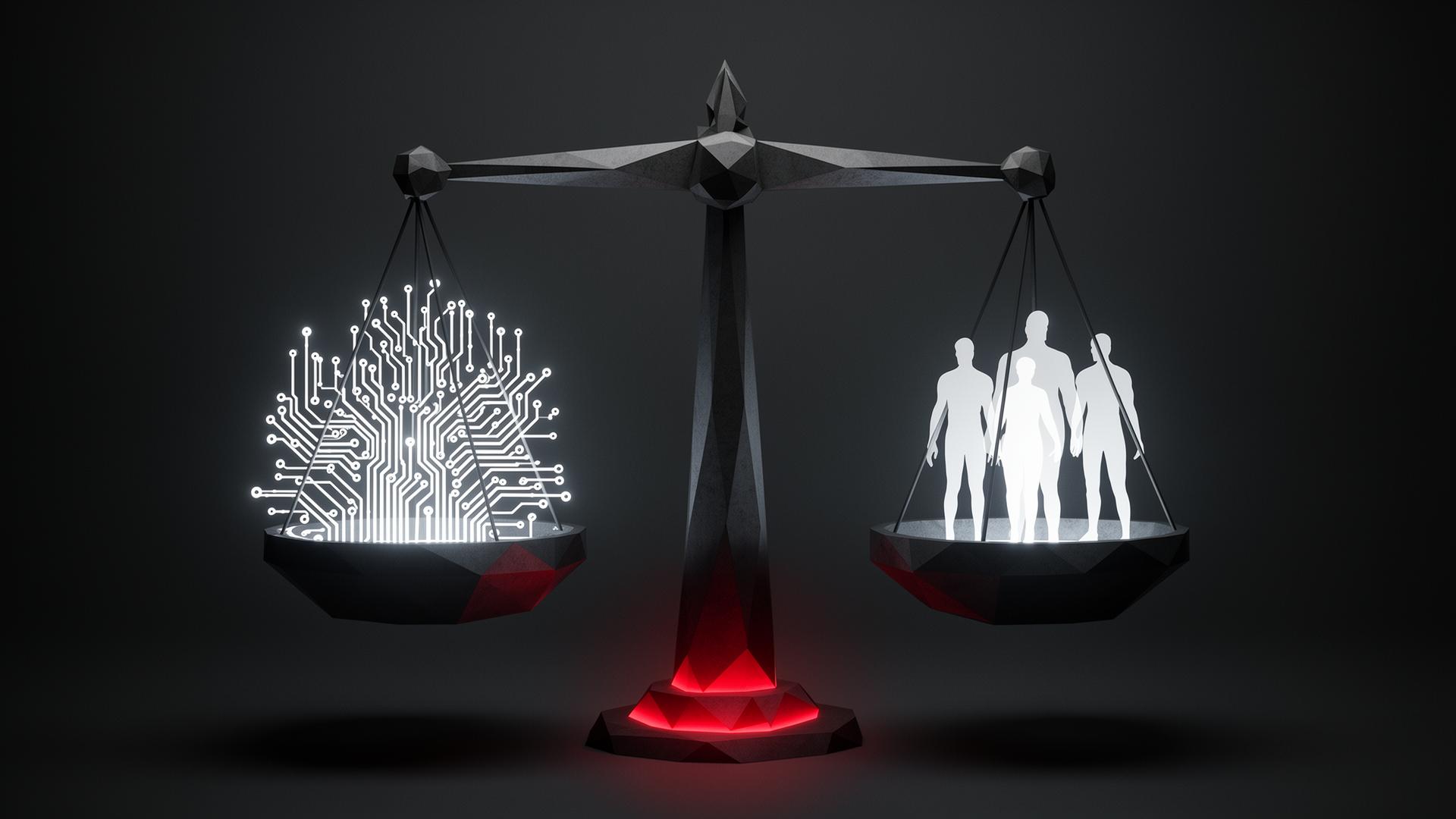
AI systems learn from data shaped by historical inequity. Without deliberate mitigation, they reproduce and amplify that inequity at scale.
Key facts
- Buolamwini & Gebru (2018) showed commercial face recognition fails far more often on darker-skinned women.
- Mathematical fairness criteria are provably incompatible in the general case.
- Most production bias mitigation combines technical tools with audit processes.
- EU AI Act and US sector rules now apply legal frameworks to algorithmic discrimination.
Where Bias Enters
Bias enters AI systems at multiple points: in data collection (who is represented), in labeling (who labels and how), in problem framing (what is being optimized), in model architecture, and in deployment context.
Most documented harms - facial recognition errors on darker-skinned faces, biased risk scores in criminal sentencing, gender bias in hiring screens - trace to combinations of these factors rather than a single cause.
Measuring Fairness
There are mathematical fairness criteria - demographic parity, equalized odds, calibration - and they are provably incompatible in general. Choosing among them is a value judgment, not a technical one.
Practical fairness work involves disaggregated evaluation, model cards, and red-teaming across protected attributes. Tools like Fairlearn and Aequitas provide standardized measurements.
Mitigation Strategies
Pre-processing approaches rebalance training data; in-processing approaches modify model objectives; post-processing approaches adjust predictions. No technique fully eliminates bias; each shifts where it appears.
The most effective mitigation is upstream: better data, clearer problem definitions, and inclusive design teams. Technical fixes alone routinely fail.
Regulation
The EU AI Act categorizes hiring, credit, and law enforcement AI as high-risk, requiring bias testing. US sector-specific rules (EEOC, CFPB) apply existing civil rights frameworks to AI-mediated decisions.
Frequently asked
Can AI bias be fully eliminated?
+
No. Bias can be measured, mitigated, and disclosed - but every system embeds value judgments. Transparency about those judgments is more achievable than perfect neutrality.
Who is responsible for biased AI?
+
Legally and ethically, responsibility distributes across developers, deployers, and procurers. Regulatory frameworks increasingly require explicit accountability.
Sources & further reading
AI & neuroethics reading
Books shaping the ethics debate. As an Amazon Associate BRAINMATTER earns from qualifying purchases at no extra cost to you.
Sponsor this work
BRAINMATTER is independent and reader-supported. Everything here stays free, ad-light, and open to everyone. A one-time sponsorship covers research time, editorial review, and hosting so we can keep publishing without paywalls.
Continue in this series
Risk Overview
A Taxonomy of AI Risks
Privacy
Privacy in the Age of AI
Information Integrity
Deepfakes, Synthetic Media, and Trust
Surveillance
AI-Powered Surveillance
Security
AI in Warfare and Autonomous Weapons
Power
Compute, Capital, and the Concentration of AI Power
Related across BRAINMATTER
Cornerstone pages on the same topics — across other authority hubs.